


Kwartier Latäng and Zülpicher Straße
The clearest student nightlife and social reference point near the University of Cologne. It is useful for first weeks, casual bars, quick food and low-pressure group movement after class.
Cologne is a Rhine-side Erasmus city where campus routines, neighborhood bars, kiosk culture and international student groups make social life easier when you know where to repeat your plans.
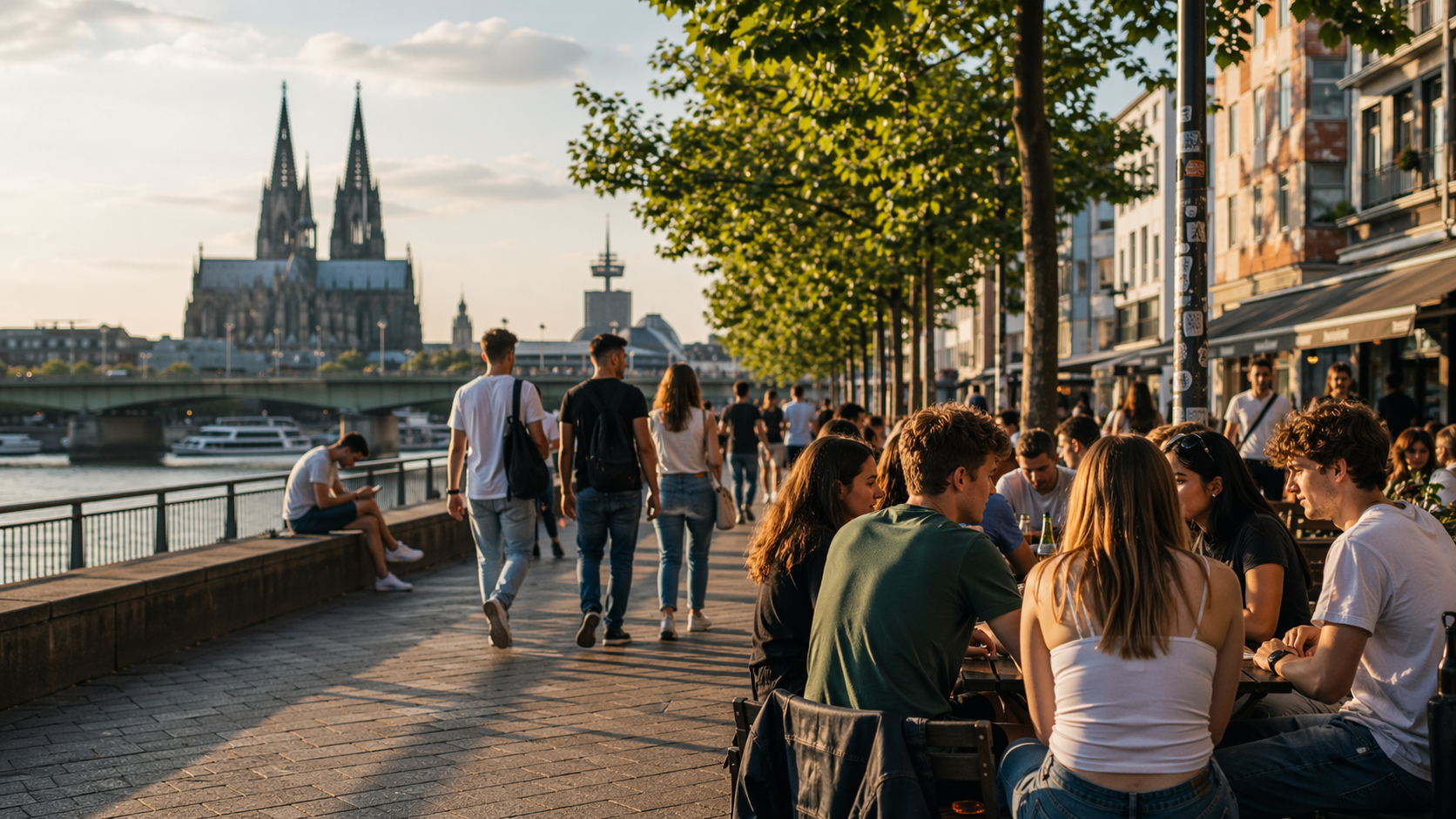
Cologne is one of Germany's most practical Erasmus choices because it combines a major university ecosystem with a city rhythm that is social without feeling as overwhelming as Berlin. Student life is spread between the University of Cologne area, TH Köln campuses, Rhine-side meeting points, Ehrenfeld nights and the everyday habit of turning simple plans into repeat encounters.
The city is not only about the cathedral or Carnival. Erasmus students usually build their semester through campus welcome weeks, ESN activity, buddy programs, shared flats, kiosk drinks, language exchanges and small group plans that move between Kwartier Latäng, Sülz, Ehrenfeld, the Belgian Quarter and the Rhine. This page sits inside the Erasmus cities hub and links back to the Unera homepage so Cologne becomes part of the wider city system.
If you are arriving soon, read how to meet Erasmus students, how to make friends during Erasmus and how to make friends abroad before the first week becomes too busy. If you are comparing tools for the social side of exchange, open the Erasmus student app page as well.
Cologne is a useful comparison city: more compact and approachable than Berlin, less housing-intense than Amsterdam for many students, and less institutionally formal than Brussels. It works best for students who want a real city, a visible student scene and enough local warmth to make repeated contact feel natural.
Student life in Cologne feels more local than glossy. A normal week is built from classes, canteen lunches, tram rides, shared-flat dinners, cheap plans near the university and nights that often start with a kiosk stop before moving to bars or a club. That makes the city strong for Erasmus students who want real routine instead of only one-off tourist activity.
The important behavior is repetition. Students usually do not meet everyone through one official welcome event. They meet people by returning to the same student streets, the same campus circles, the same language exchanges, the same Rhine walks and the same house-party networks until faces become familiar.
Compared with Berlin, Cologne is easier to read because fewer neighborhoods dominate the student map. Compared with Amsterdam, it can feel less tightly scheduled and less bike-dependent. Compared with Brussels, the social scene is less tied to internships and institutions, which helps Erasmus students build friendships through everyday routines rather than formal networks only.
The clearest student nightlife and social reference point near the University of Cologne. It is useful for first weeks, casual bars, quick food and low-pressure group movement after class.
Practical for students who want to stay close to University of Cologne buildings, libraries, parks and quieter daily routines without losing access to central nightlife.
A strong area for live music, mixed bars, clubs, international students and creative venues. It works well when students want more than the obvious university quarter.
Good for cafes, bars, shopping streets and meeting points that feel central without being only tourist-focused. Many students use it for calmer evenings before moving elsewhere.
A relaxed option for pubs, student flats and local social life. It suits students who prefer neighborhood nights over heavy club routines.
Useful for TH Köln students, Rhine views, transport access and a more practical daily base across the river from the center.
The University of Cologne is the largest anchor for Erasmus life in the city. Its faculties, international office, buddy structures and nearby neighborhoods make it the main source of student density around Sülz, Lindenthal and Kwartier Latäng.
TH Köln adds a more applied and campus-spread student layer, especially around Deutz and Südstadt. Exchange students often move between academic coordination, practical campus life and international student groups.
German Sport University Cologne brings a distinctive sports-focused exchange community near Müngersdorf, with buddy activity, international events and a campus identity that can be very social for incoming students.
The Academy of Media Arts Cologne adds a creative student layer that connects well with Ehrenfeld, Belgian Quarter and the city's cultural event scene.
Cologne University of Music and Dance supports the performing-arts side of the student ecosystem, which matters for concerts, cultural evenings and mixed international circles.
Cologne has a strong event layer, but the useful student events are not always the most visible city listings. New arrivals usually start with welcome weeks, ESN Cologne plans, buddy events, international parties, language exchanges, student bar nights and campus-linked introductions.
The city also has formats that feel very Cologne: kiosk crawls, Rhine meetups, Carnival-season group plans, casual park afternoons, Ehrenfeld nights and student gatherings that are shared through WhatsApp groups or Instagram rather than formal calendars. The best events are the ones that make a second meeting easy.
Use events as entry points, not as the whole social strategy. A welcome party or language exchange helps most when it leads to a coffee near campus, another night in Ehrenfeld, a shared tram ride home or a smaller group chat afterward.
Cologne is friendly for Erasmus students, but it still rewards structure. The fastest social progress comes from combining official university entry points with repeated local habits.
Use orientation weeks, faculty meetings, buddy programs and international office events first. They give you your first layer of names, but the real friendship work happens in follow-up plans.
Kwartier Latäng, Zülpicher Straße, Ehrenfeld, the Belgian Quarter and campus canteens work because you can see the same people again. For the broader process, read how to meet Erasmus students.
A large welcome night is easier to convert into friendship when you suggest a smaller next step: lunch after class, a Rhine walk, a shared gym session, a language tandem or a casual bar.
The city becomes easier when nearby students, interests and events are visible in one place. Unera helps turn Cologne's local density into actual conversations instead of missed chances.
Cologne nightlife is social before it is polished. Students often move through bars, kiosks, shared flats, clubs and late public transport rather than planning one perfect venue. That makes the city easier for students who prefer conversation and repeat contact over highly curated nights.
Zülpicher Straße and Kwartier Latäng are the obvious student starting points, while Ehrenfeld gives more music, club and alternative energy. The Belgian Quarter and Südstadt work better for slower evenings, pub routes and mixed groups that do not want a heavy night every time.
Carnival can be a huge social moment, but it is also intense and crowded. Erasmus students usually enjoy it more when they already have a small group, clear meeting points and realistic transport expectations.
Cologne housing can be competitive, especially near university areas. Apply for student housing when eligible, search for shared flats early and do not reject practical areas only because they are outside the first neighborhood you heard about.
Transport rules depend on your university and semester status. Check whether your student ID or digital ticket covers VRS, NRW or the student Deutschlandticket before building your routine around weekend travel.
Do not memorize the whole city at once. Learn the route from home to campus, campus to your main social area, and your late-night route back. That is enough to make the first weeks calmer.
The best Cologne semester is not only big nights. Coffee, canteen lunches, park plans, language tandems and shared errands are often where friendships become stable. For more structure, use how to make friends during Erasmus.
Cologne has enough student density, but it is spread across campuses and neighborhoods. Unera helps you discover nearby Erasmus and international students with interests, profile context and a clearer reason to connect.
The app helps students move from scattered event discovery to plans that can continue. That matters in Cologne, where the second meeting is often more important than the first party.
Unera is not a replacement for going out. It is the layer that helps you choose better plans, keep chat alive and connect Cologne's campus, event and neighborhood routines. Start from the Erasmus student app page if you want the product view.
Use Unera to discover students, find local events and turn your first weeks in Cologne into repeatable social momentum.