


Altstadt
The clearest student and evening core, useful for bars, cafes, quick plans and the daily visibility that makes Tübingen work socially.
Tübingen is a classic university Erasmus city where walkability, student traditions and repeated everyday contact make friendships form quickly when you use the local rhythm well.
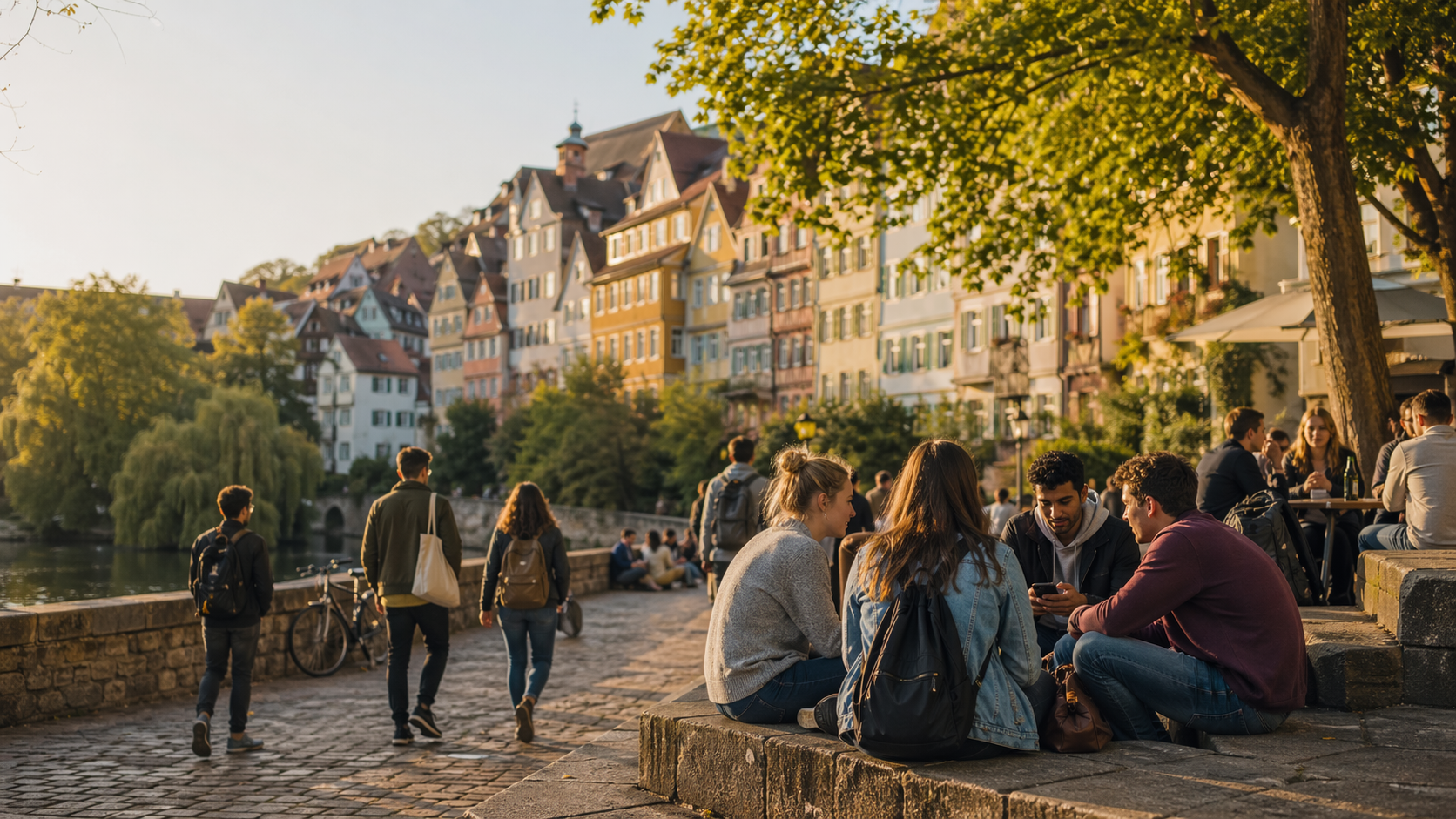
Tübingen is almost the definition of a classic university town: compact, walkable, academically dense and built around repeat contact. It works well for Erasmus students who want a serious study environment with enough bars, shared flats and student traditions to make friendships form naturally.
Incoming students usually start through the University of Tübingen Incoming Team, departmental welcome activity, language tandems and student initiatives, then settle into routines that run between the Altstadt, Lustnau, Südstadt, the Französisches Viertel and the riverside-punting culture that shapes social life in warmer months.
This page sits inside the Erasmus cities hub, links back to the Unera homepage. Before arrival, read how to meet Erasmus students, how to make friends during Erasmus and how to make friends abroad. If you are comparing tools for the social side of exchange, open the Erasmus student app page as well.
Tübingen is best compared with Heidelberg, Augsburg and Strasbourg. Heidelberg shows the more international historic route, Augsburg the calmer broader-campus route, and Strasbourg the more cross-border and institutionally mixed alternative.
Student life in Tübingen is built from repetition. Because the city is walkable and the university presence is so visible, students keep seeing the same faces in old-town streets, seminar buildings, river routes and shared-flat circles.
That makes Tübingen especially strong for students who want academic seriousness without social fragmentation. The city is not huge, but that is precisely why friendships can form quickly when you show up regularly.
Compared with Heidelberg, Tübingen feels even more centered on one university identity. Compared with Augsburg, it is denser and more tradition-led. Compared with Strasbourg, it is less international and less institutionally mixed, but often easier to read socially.
The clearest student and evening core, useful for bars, cafes, quick plans and the daily visibility that makes Tübingen work socially.
A strong residential zone for student flats and practical daily routine without losing easy access to the center.
Useful for students who want a more local neighborhood feel with quick movement into the old town.
A distinctive area for cafes, slower evenings and a slightly different social tone from the busiest central streets.
Important for science and medical routines, and for students whose main weekly rhythm forms around the university's larger campus zones.
The University of Tübingen is the main force behind the city's Erasmus life, shaping everything from orientation and course rhythm to the density of student housing and local habits.
This campus matters because it creates a distinct daily routine for many exchange students and connects study life to the wider city through repeat transport and coffee habits.
The medical side of the city adds another student ecosystem and helps explain why Tübingen feels more academically dense than its size suggests.
In a city this compact, institutional welcome structures matter a lot because they quickly feed students into the same repeatable social geography.
Tübingen has fewer huge Erasmus events than larger cities, but its best formats are orientation activity, student initiatives, language tandems, faculty evenings, house gatherings and the riverside or punting-season plans that make local student life distinctive.
The city works best when students understand that one welcome week is only the beginning. Because the map is so compact, the real gain comes from returning to the same old-town routes, seminar circles and cafe or bar habits.
Use events as entry points, not as the whole strategy. In Tübingen, routine usually creates the friendships, not the event count.
Tübingen is ideal for students who understand the power of repetition. The city does not need constant spectacle; it needs regular presence in the same places and circles.
Use the Incoming Team, departmental welcomes, language programmes and student initiatives first. They are the fastest way to get names, routines and a sense of where the student city actually moves.
Repeat Altstadt, Lustnau, Südstadt and the routes that connect your home, your seminars and the old-town evening core. For the wider process, read how to meet Erasmus students.
After a larger welcome event, suggest coffee, lunch, a river walk, a study break or one regular bar. In Tübingen, those modest next steps are often enough to turn a contact into a friend.
The city becomes even easier when nearby students and relevant plans are visible without relying only on one departmental or WhatsApp channel. Unera helps connect Tübingen's compact map to actual follow-up.
Nightlife in Tübingen is more about bars, pubs, house parties and student traditions than a heavy club circuit. That often makes it easier for Erasmus students to join without overplanning.
Altstadt remains the main evening reference point, while the river, house gatherings and smaller regular spots often matter just as much for actual social momentum.
The city works best when nightlife sits inside a broader weekly routine of study, coffee, walks and regular small-group plans instead of depending on a single big night.
Tübingen is small and popular, so student housing and shared rooms can move quickly before each semester.
The city feels easiest once you know the routes between home, your main faculty area and the old-town core.
The city is not trying to be a big capital. Its strength is the density of repeat contact, not permanent event overload.
One regular cafe, language tandem or evening route can do a lot in Tübingen. For more structure, use how to make friends during Erasmus.
Tübingen is compact enough that social progress can happen fast, but students still need a way to see who is nearby and relevant. Unera gives more context than a generic group chat.
The app helps turn small events and everyday plans into follow-up, which fits Tübingen well because repetition is the city's biggest social advantage.
Unera works best as the layer that keeps conversations alive once you have already met someone through classes, a language tandem or a city routine.
Use Unera to discover students, find local events and turn your first weeks in Tübingen into repeatable social momentum.