


Neubau
A strong district for cafes, bars, cultural spaces and evenings that feel lively without being purely tourist-focused.
Vienna is a major Erasmus city where strong universities, efficient transport and district-led social life make it easier to build momentum once you understand the local map.
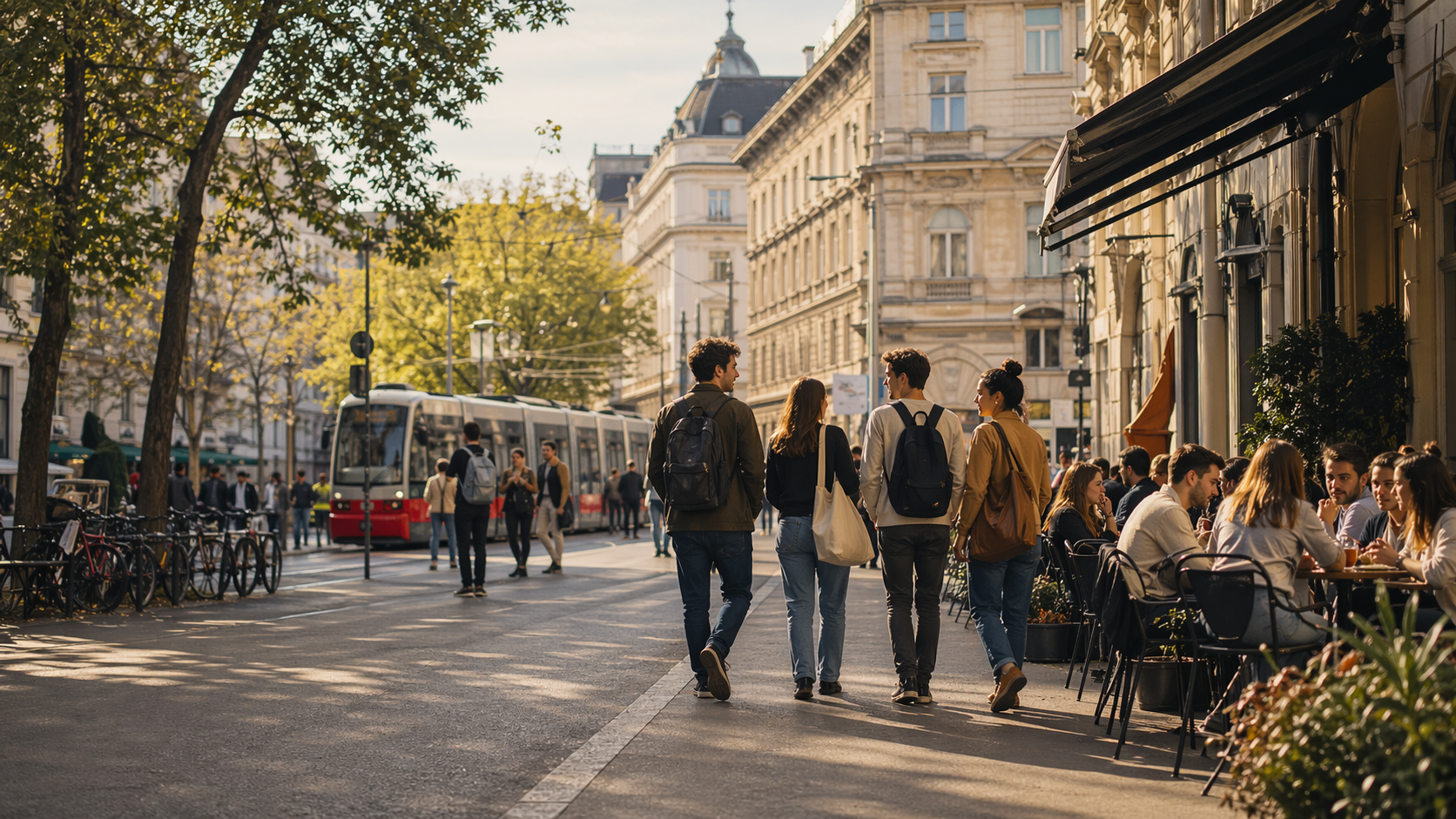
Vienna is one of the strongest large-city Erasmus destinations in Central Europe because it combines serious universities, good transport and a social life that can be elegant or casual depending on the district you choose. It suits students who want scale without losing order.
New arrivals usually start through University of Vienna orientation, faculty buddy schemes, ESN Buddynetwork TU Wien, semester-opening events, Donaukanal evenings, coffeehouse study routines and nights that move between Neubau, Alsergrund, Wieden and the Gürtel.
This page sits inside the Erasmus cities hub, links back to the Unera homepage. Before arrival, read how to meet Erasmus students, how to make friends during Erasmus and how to make friends abroad. If you are comparing tools for the social side of exchange, open the Erasmus student app page as well.
Vienna is best compared with Prague, Budapest and Strasbourg. Prague is more compact and bar-led, Budapest more price-sensitive and night-driven, and Strasbourg smaller and easier. Vienna usually sits between them as the organized large-city option.
Student life in Vienna often looks formal from the outside, but in practice it is built from repeated district habits: coffeehouses, seminars, cheap lunches, Donaukanal evenings, bars near campus routes and a transport system that makes follow-up realistic.
That makes Vienna especially good for students who want a big city without total social chaos. The city is large, but it becomes readable quickly once you choose the districts that actually fit your routine.
Compared with Prague, Vienna usually feels larger, more orderly and less immediately nightlife-led. Compared with Budapest, it can feel less chaotic and less bargain-driven. Compared with Strasbourg, it is much more capital-like and district-dependent.
A strong district for cafes, bars, cultural spaces and evenings that feel lively without being purely tourist-focused.
Useful because of its proximity to major university buildings, practical transport and a strong everyday student rhythm.
A flexible area for student housing, mixed nightlife access and movement toward the canal and larger event zones.
Good for students who want TU Wien access, cafes and a central but still manageable daily routine.
Useful for students who want practical housing, nightlife access and a more everyday local atmosphere.
The University of Vienna is the main academic anchor behind the city's Erasmus flow, especially through orientation, buddy systems and visible central student density.
TU Wien adds a strong technical and international student layer, with its own social rhythms and buddy-network routes.
WU adds another large student ecosystem and helps explain why Vienna feels more multi-campus than many classic student capitals.
The creative-institution layer matters because it broadens the city's student mix beyond one academic profile.
Vienna has a strong Erasmus event layer built around university welcome weeks, buddy programmes, ESN Buddynetwork TU Wien activity, language tandems, canal-side evenings and student events that spread through district habits as much as formal calendars.
The city works best when students use events to learn where they actually want to return. One good welcome week matters most when it leads to a regular district, cafe or bar pattern that fits your semester.
Use events as entry points, not as the whole plan. Vienna rewards students who turn its scale into a smaller repeatable social map.
Vienna gets easier once you stop treating it as one giant city and start using a few repeatable districts and university routes. Official buddy systems matter; repeated local habits matter more.
Use University of Vienna orientation, faculty welcome weeks, ESN Buddynetwork TU Wien and department buddy systems first. They are the fastest way to get names and the first useful district routes.
Repeat Alsergrund, Neubau, Donaukanal and the districts that connect your home, campus and usual evenings. For the wider process, read how to meet Erasmus students.
After a larger welcome night, suggest a smaller next step such as coffee, lunch, a canal walk, a museum evening or one repeat bar. Vienna responds well to low-pressure follow-up.
The city becomes easier when nearby students and relevant plans are visible without relying on one faculty chat. Unera helps connect Vienna's campuses and districts to actual conversation and repeat contact.
Nightlife in Vienna is broader than students sometimes expect, from relaxed bars and canal evenings to Gürtel venues, clubs and seasonal social peaks.
Neubau, Donaukanal and selected central routes matter most for regular student evenings, while larger nights usually depend on the district and format that fit your group best.
The city works best when nightlife sits inside a broader routine of classes, coffeehouses, transport efficiency and repeat district habits instead of one isolated big night.
Vienna feels much easier once you know whether your semester is more campus-led, canal-led or nightlife-led. District choice shapes everything.
The city rewards students who understand their tram, U-Bahn and late-route options early.
Vienna is not chaotic, and that is a strength if you use regular weekly habits instead of permanent spontaneity.
Choose a few districts and repeat them before the city starts feeling too broad. For more structure, use how to make friends during Erasmus.
Vienna has major student density, but it is split across universities and districts. Unera helps you discover nearby Erasmus and international students with context that makes the first step easier.
The app helps turn welcome events, district plans and campus routines into follow-up. That matters in Vienna, where the second meeting often decides whether the city starts feeling personal.
Unera works best as the layer that connects Vienna's scale to conversation, helping students move from orientation week to a real social rhythm.
Use Unera to discover students, find local events and turn your first weeks in Vienna into repeatable social momentum.