


Kreuzberg
A strong social base for bars, food, culture and international student movement that does not feel limited to campus.
Student life in Berlin depends on where you live, how you move and which routines you repeat. This page maps the daily side of Erasmus beyond one-off events.
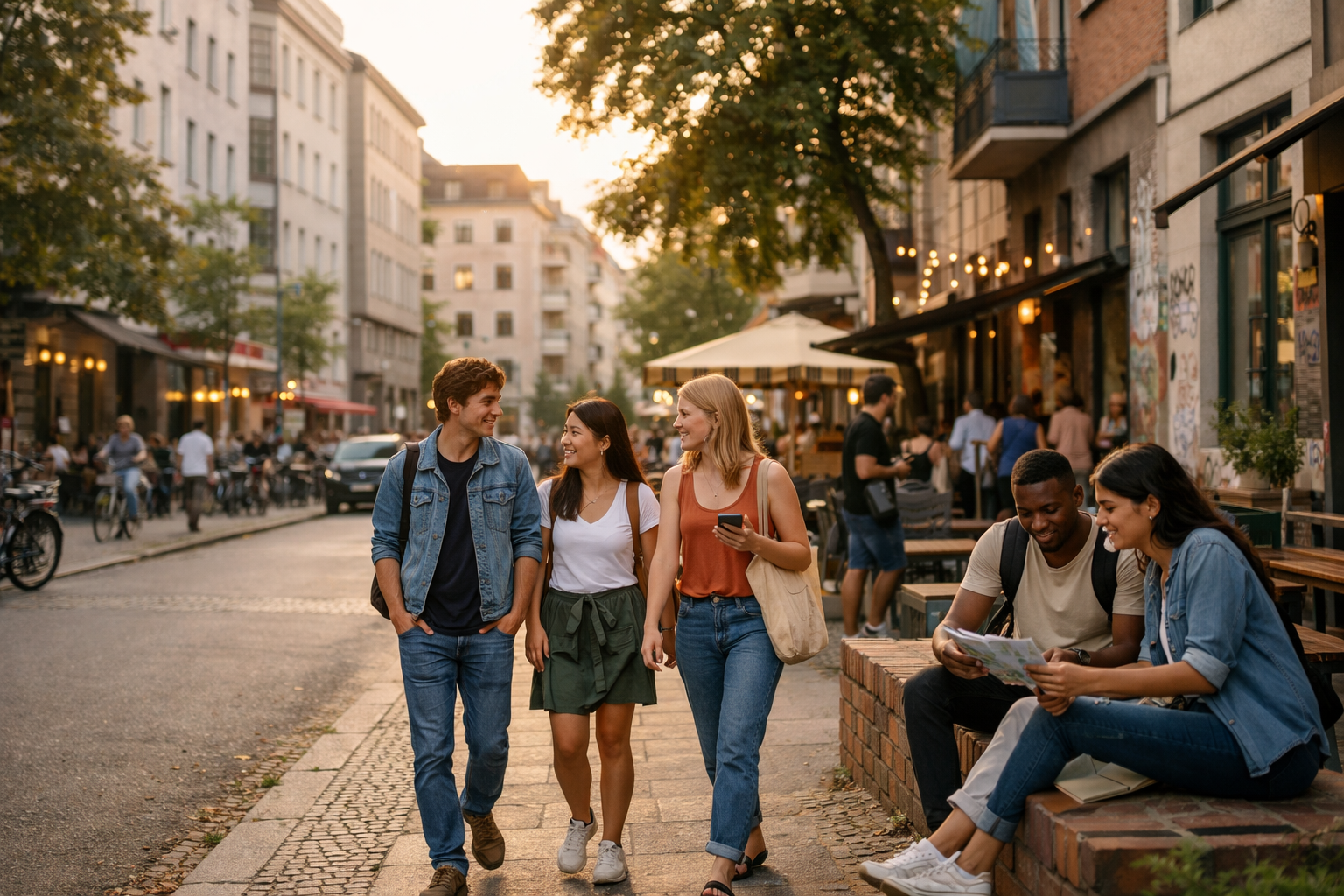
Student life in Berlin is built from daily logistics as much as nightlife. Where you live near Kreuzberg, Friedrichshain or Neukolln, how you reach Humboldt University of Berlin, and which cafes, bars or campus groups you repeat will shape the semester more than any single weekend plan.
The city rhythm is independent, late and neighborhood-led, with students choosing their own mix of campus, bars, clubs, parks and cultural plans. This student-life page keeps the focus on housing areas, university movement, local behavior and weekly routine, while linking back to Erasmus in Berlin and the Erasmus cities hub.
For wider comparison, use the Erasmus cities hub, return to the Unera homepage, or compare Berlin with Amsterdam, Prague and Warsaw. The internal links are designed as a loop so each city page, event page, meeting guide, student-life guide and budget guide supports the same topical cluster.
A normal Erasmus week in Berlin is shaped by classes, transit, food routines and evening plans. Because the city is independent, late and neighborhood-led, with students choosing their own mix of campus, bars, clubs, parks and cultural plans, students should choose a repeatable base rather than treating every day like a tourist route.
The strongest routines often combine a campus anchor, one practical neighborhood and one social area. In Berlin, that might mean moving between Humboldt University of Berlin, Kreuzberg and Friedrichshain during the same week.
For the event-specific side, open Erasmus events in Berlin. For the social side, use meet students in Berlin.
A strong social base for bars, food, culture and international student movement that does not feel limited to campus.
Useful for nightlife, shared flats and students who want an active evening scene near the east side of the city.
Popular with international students for cafes, cheaper social plans and a more mixed everyday rhythm.
Calmer and residential, but good for students who want cafes, parks and easy tram or U-Bahn access.
A practical option for students balancing budget, transit and access to the rest of Berlin.
Humboldt University of Berlin adds real student density to Berlin, shaping campus routines, association events and the mixed Erasmus circles students use to find people beyond their own course.
Free University of Berlin adds real student density to Berlin, shaping campus routines, association events and the mixed Erasmus circles students use to find people beyond their own course.
Technical University of Berlin adds real student density to Berlin, shaping campus routines, association events and the mixed Erasmus circles students use to find people beyond their own course.
Berlin University of the Arts adds real student density to Berlin, shaping campus routines, association events and the mixed Erasmus circles students use to find people beyond their own course.
HTW Berlin adds real student density to Berlin, shaping campus routines, association events and the mixed Erasmus circles students use to find people beyond their own course.
Returning to Kreuzberg or Friedrichshain gives you better odds of turning strangers into familiar faces.
Events and societies around Humboldt University of Berlin are useful because they concentrate students with similar timing.
Berlin can feel busy fast, so a sustainable semester needs quieter routines as much as nights out.
Use the next page based on the intent behind your search. Each route links back into the Erasmus cities hub.
Use Unera in Berlin to meet students, discover events and keep the city cluster connected from research to arrival.