


Teatinos
The clearest campus zone in Malaga, useful for University of Malaga students who want shared flats, practical daily routines and regular post-class social contact.
Malaga is a warm-weather Erasmus city where campus routines, beach plans and the old-center bar circuit create social momentum quickly when you know which areas students actually repeat.
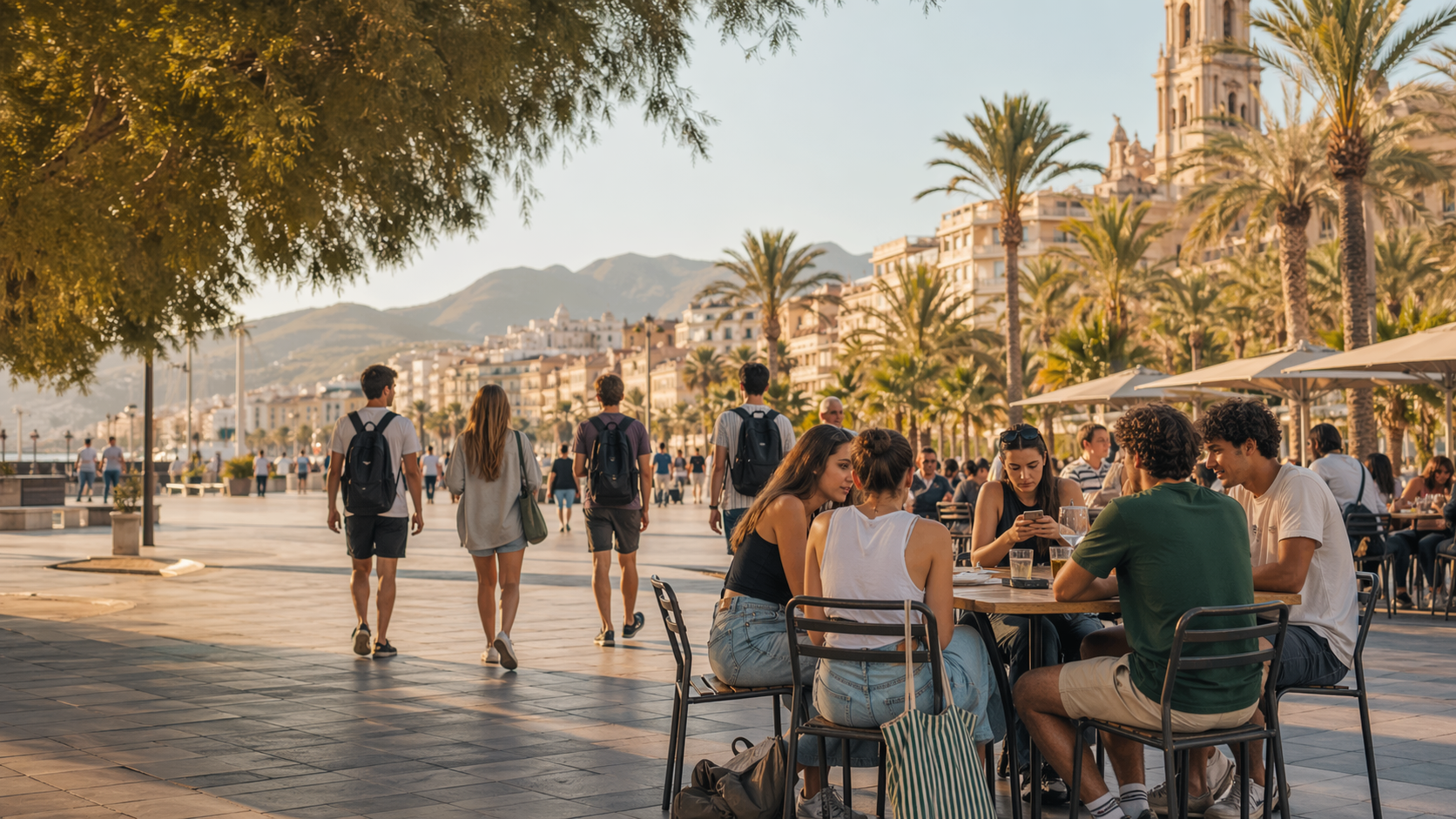
Malaga is one of the easiest warm-weather Erasmus cities to enter socially because campus life, beach routines and the old-center bar circuit sit close together. The city works well for students who want sun, Spanish practice and a semester that feels active without the scale of Madrid or Barcelona.
Students usually build their network through University of Malaga welcome activity, Teatinos campus routines, ESN Malaga plans, terrace dinners around Plaza de la Merced, Pedregalejo beach evenings and the habit of moving from casual daytime plans to later nights without huge logistics.
This page sits inside the Erasmus in Spain guide and the Erasmus cities hub, and it links back to the Unera homepage. Before arrival, read how to meet Erasmus students, how to make friends during Erasmus and how to make friends abroad. If you are comparing tools for the social side of exchange, open the Erasmus student app page as well.
Malaga is worth comparing with Valencia, Seville and Granada. Valencia gives you a larger coastal city, Seville a more inland and tradition-heavy rhythm, and Granada a denser low-cost student core. Malaga usually sits in the middle: beach-driven, social and easy to read.
Student life in Malaga feels easy to enter because the city is readable. Teatinos, the center and the beach are close enough that students can start seeing the same people quickly instead of depending on major transport or long planning windows.
The city works especially well for Erasmus students who want social life to feel active without having to chase constant novelty. Beach afternoons, terrace dinners, language tandems, shared flats and later nights can all sit inside one manageable weekly rhythm.
Compared with Valencia, Malaga is smaller and usually easier to learn fast. Compared with Seville, it feels more beach-driven and less monument-centered. Compared with Granada, it is broader and more spread, with a slightly stronger city feel.
The clearest campus zone in Malaga, useful for University of Malaga students who want shared flats, practical daily routines and regular post-class social contact.
A strong social core for terraces, bars, dinners and the first-week plans that help new students read the city quickly.
Useful for mixed groups, cafes, cultural venues and evenings that feel central without relying only on the busiest tourist streets.
Beach-side areas that matter for sunset plans, chiringuitos, casual dinners and the softer side of Malaga student life.
A practical link between beach and center, especially for students who want outdoor routines and easier movement toward the old city.
The University of Malaga is the main academic anchor behind the city's Erasmus scene, especially through incoming exchange routines and the scale of its Teatinos campus.
Teatinos matters because it concentrates daily student density, practical services and a lot of the repeat contact that turns classmates into real local friends.
These central academic spaces help connect study life with the old center and make Malaga easier for students who want campus and nightlife to sit close together.
Malaga has a useful Erasmus event layer built around welcome weeks, ESN Malaga activity, language exchanges, terrace meetups, beach plans and student parties that spread through WhatsApp and Instagram as much as through formal calendars.
The strongest event formats are usually the ones that create a second meeting: a beach afternoon that turns into dinner, a language tandem that becomes a regular cafe routine, or a welcome night that turns into a smaller group plan.
Use events as entry points, not as the whole social strategy. Malaga rewards students who repeat Teatinos, the center and the beach side until the city stops feeling like a list of options and starts feeling familiar.
Malaga is easy to enter socially, but students still need to turn that ease into continuity. The city works best when you combine campus, center and beach routines instead of relying only on nightlife.
Start with University of Malaga orientation, incoming student activity, ESN Malaga plans and faculty-level welcome days. They give you the first layer of names and group chats before the city opens up properly.
Repeat areas such as Teatinos, Plaza de la Merced, Soho and Pedregalejo. For the broader process, read how to meet Erasmus students.
After a big welcome party, suggest a lower-pressure follow-up such as coffee after class, a beach walk, tapas or an early dinner. In Malaga, those smaller plans often create the real friend group.
The city becomes easier when nearby students and relevant plans are visible in one place. Unera helps connect Malaga's campus, beach and nightlife routines so the first meeting turns into an actual next step.
Nightlife in Malaga is stronger than many students expect because it sits on top of a broader social routine: beach evenings, terrace culture, tapas, bars around the old center and later club plans all connect naturally.
Centro Histórico, Plaza de la Merced and parts of Soho are the clearest evening reference points, while Pedregalejo and El Palo matter when students want something slower, more outdoor and more repeatable than a full night out.
The best Malaga semesters are usually built from a mix of beach, dinners and occasional bigger nights. Students who depend only on the latest possible plan often miss the easier, more social rhythm the city actually offers.
Teatinos is practical for classes, while central or beach-side zones change your evening rhythm. Pick based on the week you want to live, not only on one ideal photo of the city.
You do not need the whole city at once. Learn the route from home to campus, campus to the center and your usual late route back.
Language tandems, cafes and everyday errands do more for social integration in Malaga than waiting for one perfect international group.
Malaga feels easy, but it still rewards repeated initiative. For more structure, use how to make friends during Erasmus before comfort turns into social drift.
Malaga looks simple from the outside, but students still move between Teatinos, the center and the beach side. Unera helps you discover nearby Erasmus and international students without relying only on timing or chance.
The app helps connect scattered beach plans, event discovery and last-minute nights out into plans that can actually continue the next day or the next week.
Unera works best alongside the real city. It helps you choose better follow-up, keep chat alive and make Malaga's easy first contact turn into a stable social routine.
Use Unera to discover students, find local events and turn your first weeks in Malaga into repeatable social momentum.