Erasmus country guide
Erasmus in Spain: cities, student life, costs and how to build a social semester
Spain is one of the most reliable Erasmus destinations for students who want warm city life, late social routines, strong international flow and several very different city types inside one country. This pillar page connects every active Spain city guide in the Unera cluster and helps you compare Spain with other Erasmus destinations.
Country pillar
Introduction to Erasmus in Spain
Erasmus in Spain works because student life is visible in everyday space. Students do not only move between campus and accommodation. They meet through terraces, tapas, plazas, beach plans, language exchanges, university groups, ESN events, late dinners and repeated neighborhood routines that make social life easier to enter.
For students searching for erasmus Spain, Erasmus in Spain, study abroad Spain, student life Spain or international students Spain, the key choice is not only the country. It is the Spanish city rhythm that fits your semester. Barcelona, Madrid, Valencia, Granada, Seville, Malaga, Salamanca, Zaragoza and Bilbao all offer different versions of study abroad in Spain.
Use this page as the top-level SEO entry for Spain, then move into the city guides when you need local detail. The full country system starts from the Erasmus countries hub, while the city directory sits at Erasmus cities.
Why Spain
Why choose Spain for Erasmus
Student life stays visible
Spain gives Erasmus students one of the clearest mixes of weather, visible city life, international openness and repeatable social routines. It works especially well when you want student life to keep happening outside formal campus space.
One country, several strong city types
The biggest advantage is consistency with variation. Barcelona and Madrid are large and high-energy, Valencia is coastal and more manageable, Granada is compact and student-heavy, Seville is late and plaza-led, Malaga is beach-driven, Salamanca is compact and academic, Zaragoza is practical and inland, and Bilbao is urban and Basque.
Warmth helps, routine decides
The main tradeoff is that the same social openness that makes Spain attractive can stay superficial if students never turn it into routine. Students do best when they pick a few neighborhoods, event formats and university entry points early.
Student life
Student life in Spain
Daily plans matter more than theory
Student life in Spain usually grows through repeated low-friction plans: coffee after class, tapas, terrace dinners, beach afternoons, language exchanges, student nights and the habit of meeting again after class instead of going straight home.
Social circles form in layers
International students in Spain should expect a mixed social environment. Some circles form through universities and ESN, others through housing, Erasmus group chats, sports, beach plans, nightlife and neighborhood routines.
The first two weeks decide pace
Students who accept simple plans early and keep repeating the same areas usually build stronger social momentum than students who wait for one perfect event.
Cost of living
Cost of living in Spain for Erasmus students
Costs change by city
The cost of living in Spain changes a lot by city and by housing timing. Barcelona and Madrid usually put the most pressure on rent, Valencia can still rise in the right areas, while Granada, Seville, Malaga, Salamanca and Zaragoza can feel more manageable if students plan housing and transport well. Bilbao usually needs more careful housing timing than Spain's smaller inland routes.
Rent is the main pressure point
Start early, verify commute times to campus and social zones, and avoid choosing a place only because it looks central on a tourist map. In Barcelona and Madrid, a bad commute can make student life feel more expensive and less social.
Social spending is controllable
Spain often feels cheaper socially when students rely on terraces, tapas, beach plans, parks and house dinners instead of only promoter-led nightlife. Daily habits decide the budget more than broad country averages.
Best cities for Erasmus in Spain
Choose the Spanish city that fits your student rhythm.
This is the country pillar for all Spain city pages. Every city below has its own local guide, and each Spain city or support page should route back to this Spain page.
Barcelona is the most international and high-energy route in the Spain cluster, with beaches, neighborhoods and nightlife creating constant social visibility. Choose it if you want scale, international intensity and a semester that feels active from day one.
Madrid is Spain's biggest capital-city route, strongest for late nights, city range, varied neighborhoods and broad international movement. Choose it if you want a large metropolitan semester with nightlife, variety and flexible social routines.
Valencia is a beach-city option with lower friction than Madrid or Barcelona, balancing coastal life, manageable size and strong student routine. Choose it if you want sea access and social energy without the pressure of Spain's biggest metros.
Granada is one of the densest classic student cities in Spain, where low-cost routines, tapas culture and UGR keep social momentum high. Choose it if you want a compact, affordable Erasmus city with fast student-to-student contact.
Seville is a late, plaza-led and outdoor social city where tapas, river walks and repeated neighborhoods shape the semester. Choose it if you want Andalusian rhythm, warm evenings and a city that feels social without being huge.
Malaga is a beach-driven city where Teatinos, the center and seaside routines create an easy-to-read social map for new arrivals. Choose it if you want sun, beach plans and a semester that feels relaxed but still socially active.
Salamanca is a classic university city where USAL, Plaza Mayor, tapas routes and language exchanges make social life compact and easy to repeat.
Zaragoza is a practical inland option with University of Zaragoza routines, tapas streets and strong links between Madrid, Barcelona and the north.
Bilbao is the Basque urban route, shaped by Deusto, UPV/EHU, pintxos, metro movement and a more northern Spanish student identity.
Universities
Universities in Spain that shape the Erasmus ecosystem
Spain has one of the broadest Erasmus university ecosystems in Europe, including large public universities, technical institutions, business schools and internationally visible city campuses.
University of Barcelona
Autonomous University of Barcelona
Pompeu Fabra University
Complutense University of Madrid
Autonomous University of Madrid
Carlos III University of Madrid
University of Valencia
Polytechnic University of Valencia
University of Granada
University of Seville
University of Malaga
University of Salamanca
University of Zaragoza
University of Deusto
University of the Basque Country
Events and social life
Erasmus events in Spain are active, but discovery is fragmented.
Where events appear
Erasmus events in Spain are active, but discovery is fragmented across ESN chapters, university associations, promoter pages, language exchanges, WhatsApp groups, Instagram accounts and local venue calendars.
What actually works
The most useful events are the ones that create follow-up. Welcome weeks, tapas nights, beach plans, terrace meetups, day trips and recurring student evenings are usually better for building friendships than one-off large parties.
Meet students
How to meet students in Spain
-
01
Start from university entry points
Join welcome plans, class groups and ESN activity, then use those weak ties to create second meetings instead of collecting random contacts.
-
02
Reduce the city to repeatable routes
In Barcelona and Madrid, pick two or three workable neighborhoods. In Valencia and Malaga, use the readable city map. In Granada and Seville, rely on compactness, campus circles and the same late social zones.
-
03
Use tools for follow-up
Read how to meet Erasmus students and how to make friends during Erasmus before the first weeks drift. Use Unera as an Erasmus student app when nearby people and plans are scattered.
Nightlife and culture
Nightlife in Spain is not only clubbing.
Terraces, tapas and plazas
For many Erasmus students, the real social layer is terrace time, tapas, plazas, beach evenings, house dinners, neighborhood bars and the long transition from dinner into later plans.
Different cities, different nights
Barcelona and Madrid are the strongest nightlife contrasts: Barcelona is more beach-driven and internationally visible, while Madrid is more capital-city and late-night in rhythm. Valencia, Seville, Granada and Malaga each offer a softer or more compact version of that social energy.
Culture becomes social
Food, language, music, local festivals, trains, beaches and weekend trips become social tools when students use them to repeat contact rather than only consume the destination.
Practical tips
Practical tips for Erasmus in Spain
Housing
Start early, check legitimacy, verify transit to campus and social areas, and remember that beach-adjacent or hyper-central flats change daily routine more than they change photos.
Visa and residence
EU and non-EU students follow different processes. Non-EU students on longer stays should check their university, consulate and official Spanish guidance before arrival and keep copies of every document.
Transport
Metros and buses are useful in Barcelona, Madrid and Valencia, while compact cities such as Granada make walking easier. In every city, housing location shapes both budget and social life.
Lifestyle
Learn basic Spanish, adapt to later meal times, expect dinners and nights to start later than in northern Europe, and build a weekly routine early so the semester does not stay surface-level.
Comparison
Spain vs other Erasmus destinations
Spain vs Italy
Spain often feels more consistently late-night and socially direct across major student cities, while Italy can feel more varied by city type and more tied to historic university identity. Compare both if weather, city rhythm and nightlife style are your main filters.
Spain vs France
Spain usually feels warmer, more outdoor and easier for casual student routines, while France can feel stronger for academic prestige and metropolitan structure. Compare both if language, admin style and city formality matter.
Spain vs Germany
Spain is usually more social, later and less formal in everyday student life, while Germany can feel more structured, transport-led and predictable. Compare both if efficiency, budget planning and social spontaneity matter.
How Unera helps
Use the country page to choose the route. Use Unera to build momentum.
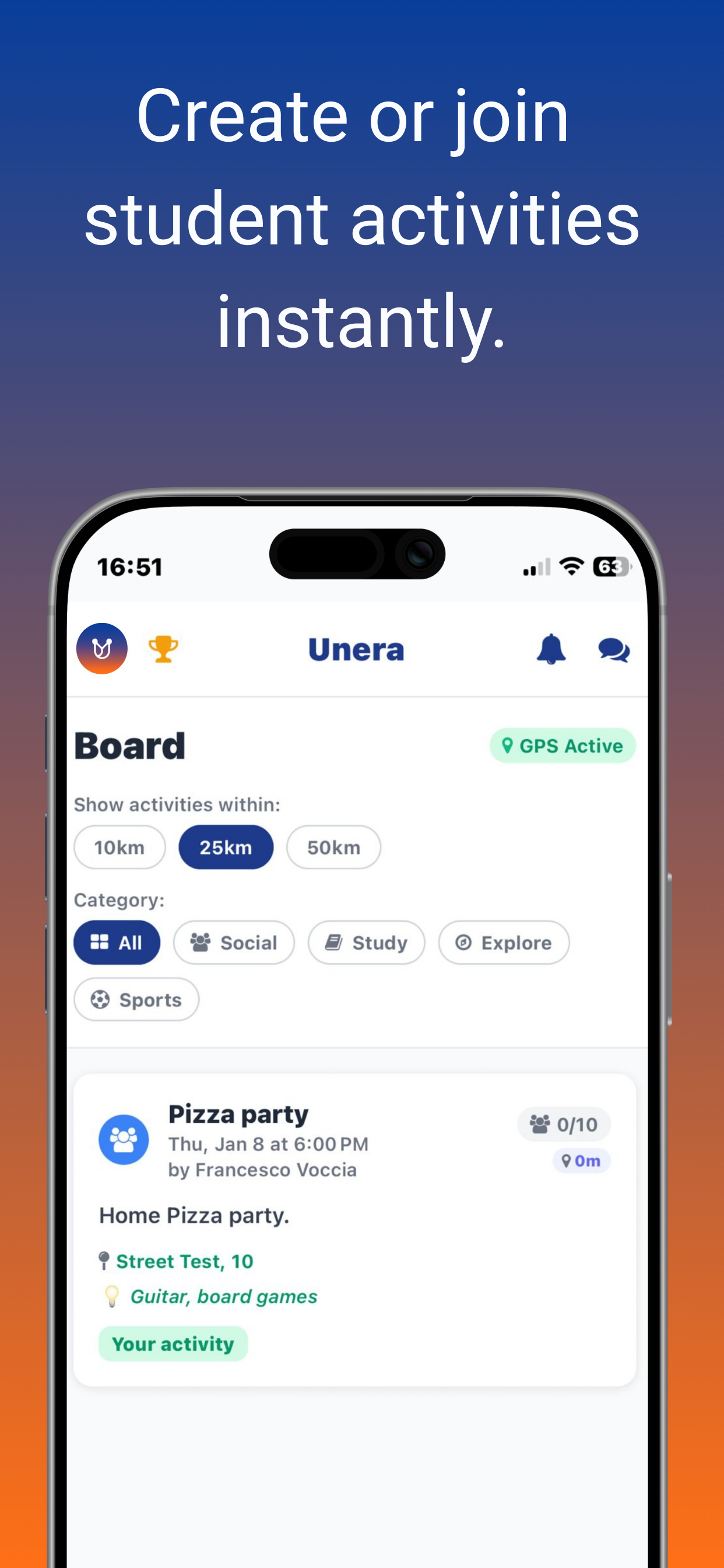
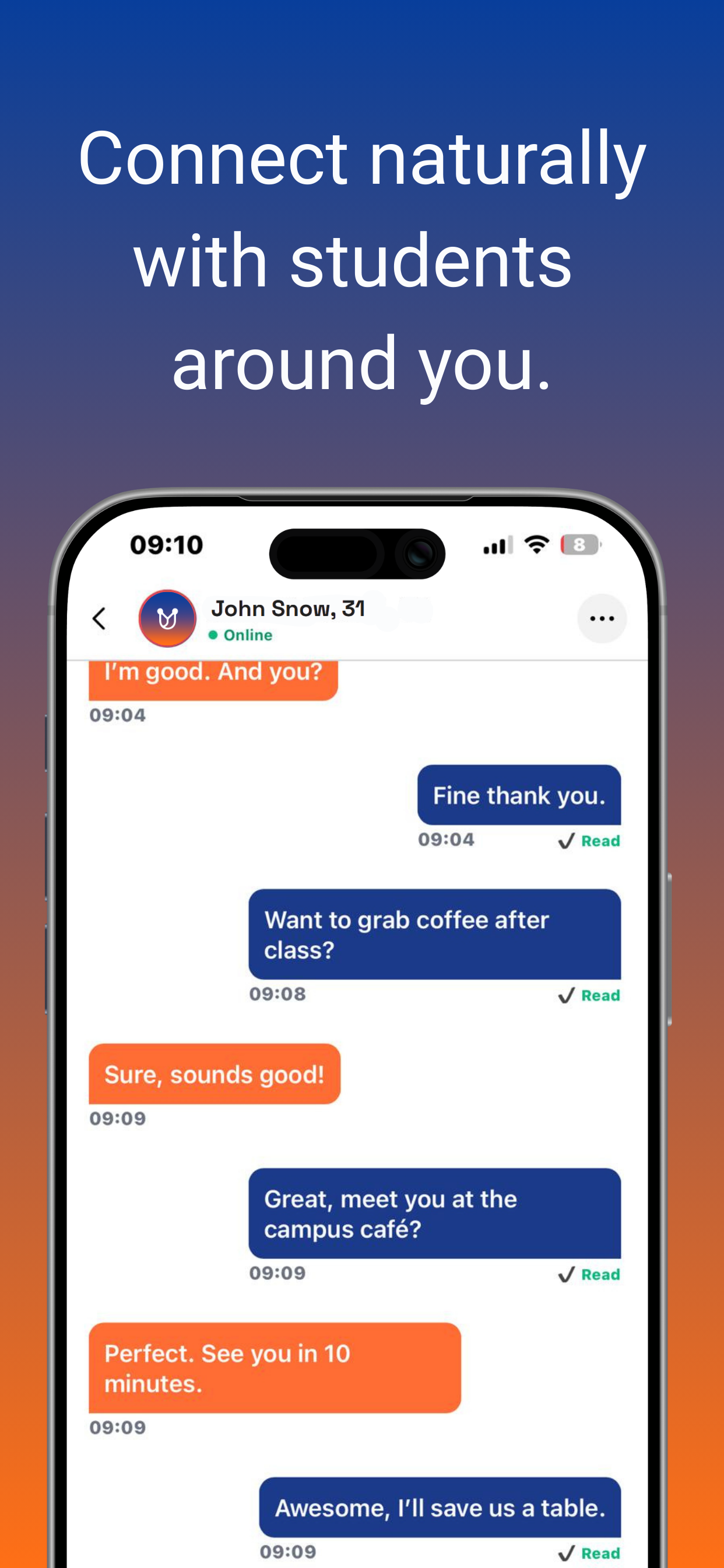
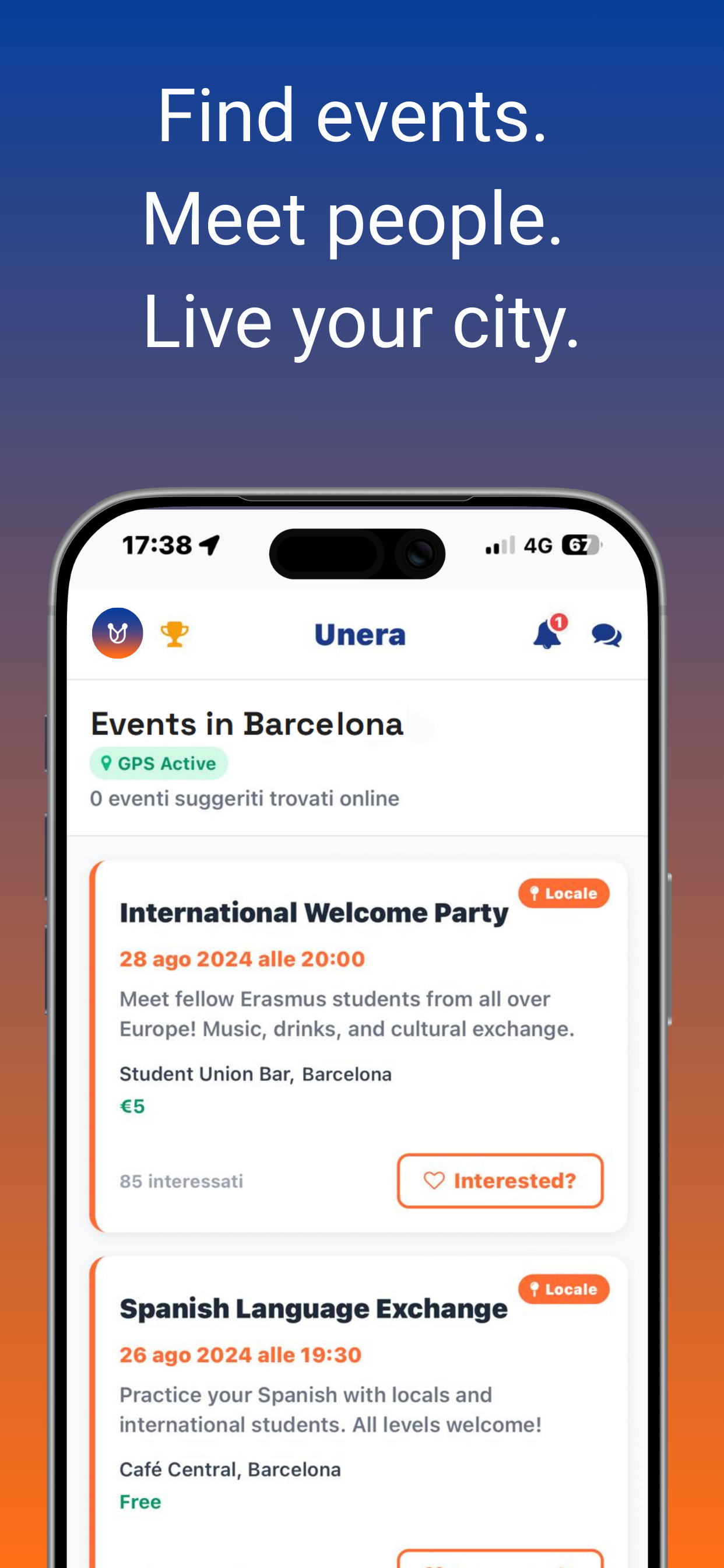
Unera is built for the part of Erasmus that generic guides do not solve: finding nearby students, discovering useful plans, starting conversations and keeping momentum after the first week.
In Spain, this matters because social life is active but fragmented. Students move through university circles, ESN, promoter nights, beach plans, neighborhoods and local group chats. Unera brings the people and plan layer closer together.
1Find nearby students
See people around your city with social context, not anonymous lists.
2Discover plans
Find events and activity around the routines students actually use.
3Keep contact moving
Turn first meetings into chat, follow-up and a real student routine.
FAQ
Useful questions about Erasmus in Spain
Is Spain good for Erasmus students?
Yes. Spain is one of the strongest Erasmus countries for students who want visible city life, warm weather, late social routines, strong international flow and several city types inside one country.
What are the best Erasmus cities in Spain?
Is studying abroad in Spain expensive?
Spain varies by city. Barcelona and Madrid usually put the most pressure on rent, Valencia can still rise in the right areas, Granada, Seville, Malaga, Salamanca and Zaragoza can feel more manageable, and Bilbao usually needs more careful housing timing. Housing timing, commute distance and lifestyle habits matter more than generic country averages.
How do Erasmus students meet people in Spain?
Most students meet people through welcome events, ESN activity, class groups, terraces, tapas, beach plans, language exchanges, housing and repeated neighborhood routines. Tools like Unera help connect nearby students and plans when discovery is fragmented.
Is Spain better than Italy for Erasmus?
It depends on the student. Spain often feels more consistently late-night and socially direct, while Italy can feel more varied by city type and more tied to historic university identity. Compare
the Italy guide directly.
Do international students need a visa for Spain?
EU and non-EU students follow different rules. Non-EU students should verify the study visa and residence process with their host university, consulate and official Spanish guidance before arrival, especially for stays longer than 90 days.
Download
Download Unera before your Erasmus in Spain starts
Use Unera to discover nearby students, find events and turn your first weeks in Spain into real social momentum.