


Alameda
Alameda is a practical reference point in Seville because students use it for meeting points, repeat plans or campus-linked routines.
Meeting students in Seville is easier when you combine campus entry points, neighborhood repetition and event follow-up. This guide focuses on the social process, not just a list of places.
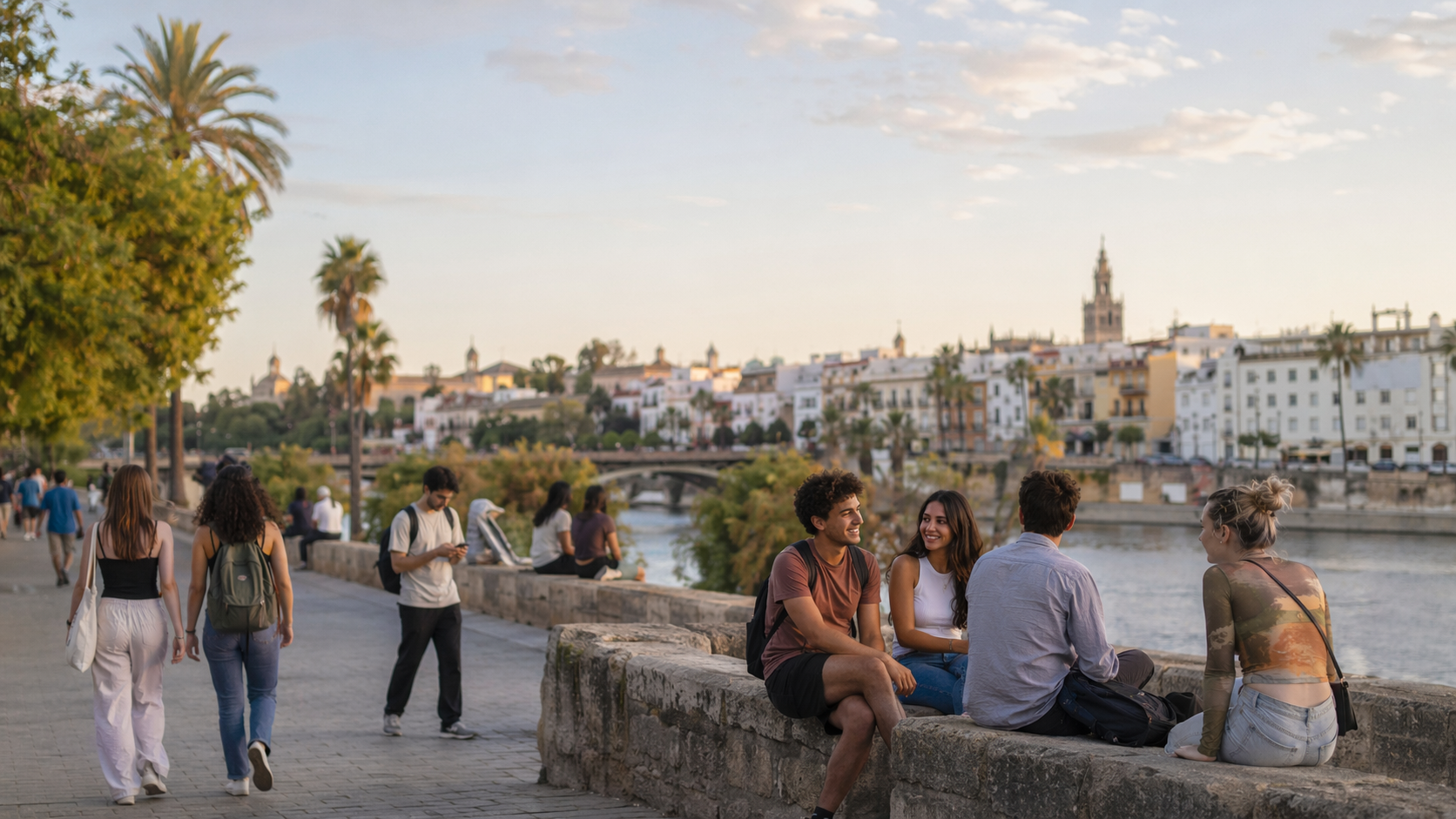
To meet students in Seville, focus less on one perfect icebreaker and more on places where repetition is natural. Areas like Alameda de Hercules, Triana and Nervion, plus circles around University of Seville, give Erasmus students multiple chances to see the same people again.
In practice, students use outdoor plazas, tapas routes, late dinners and repeated neighborhood bars to turn first meetings into groups. This page is for students searching how to make friends locally, so it links back to Erasmus in Seville, the Erasmus cities hub and the other Seville support guides.
For wider comparison, use the Erasmus cities hub, return to the Unera homepage, or compare Seville with Granada, Porto and Paris. The internal links are designed as a loop so each city page, event page, meeting guide, student-life guide and budget guide supports the same topical cluster.
Alameda is a practical reference point in Seville because students use it for meeting points, repeat plans or campus-linked routines.
Guadalquivir river is a practical reference point in Seville because students use it for meeting points, repeat plans or campus-linked routines.
Rectorado area is a practical reference point in Seville because students use it for meeting points, repeat plans or campus-linked routines.
Viapol is a practical reference point in Seville because students use it for meeting points, repeat plans or campus-linked routines.
University of Seville adds real student density to Seville, shaping campus routines, association events and the mixed Erasmus circles students use to find people beyond their own course.
Pablo de Olavide University adds real student density to Seville, shaping campus routines, association events and the mixed Erasmus circles students use to find people beyond their own course.
Loyola University Andalusia adds real student density to Seville, shaping campus routines, association events and the mixed Erasmus circles students use to find people beyond their own course.
EUSA University Centre adds real student density to Seville, shaping campus routines, association events and the mixed Erasmus circles students use to find people beyond their own course.
One of the strongest student nightlife areas, with bars, terraces and low-pressure evening movement.
Useful for students who want local character, river access and group dinners away from the most obvious tourist center.
Practical for students balancing shopping, transport and access to University of Seville areas.
A student-friendly area for shared flats, cheaper food and everyday routines near the historic center.
More touristic, but important for orientation, walks and first-week meetups before students find their repeat zones.
In Seville, students use outdoor plazas, tapas routes, late dinners and repeated neighborhood bars to turn first meetings into groups. The students who settle fastest usually repeat a small number of places and formats until familiar faces appear.
University circles matter because University of Seville and Pablo de Olavide University create predictable student density. That density becomes useful only when you move from introduction to follow-up.
Use this page with Erasmus events in Seville and student life in Seville to connect people discovery with actual places and weekly routine.
See students around Seville with interests, universities and profile context before sending a connection request.
When interest is mutual, direct chat keeps the next step simple and avoids losing contact after a busy first week.
Combine student discovery with Seville event browsing so a plan can become a real meeting route.
Use the next page based on the intent behind your search. Each route links back into the Erasmus cities hub.
Use Unera in Seville to meet students, discover events and keep the city cluster connected from research to arrival.