


Erasmus and international meetups
Useful for new arrivals who want a fast first step into the city. These events help most when you still need to understand which student circles are worth repeating.
Rome gives students scale, history and constant movement, but that does not mean the best plans are easy to spot. This guide explains which event formats work, where students actually go, and how to turn event discovery into real social momentum.
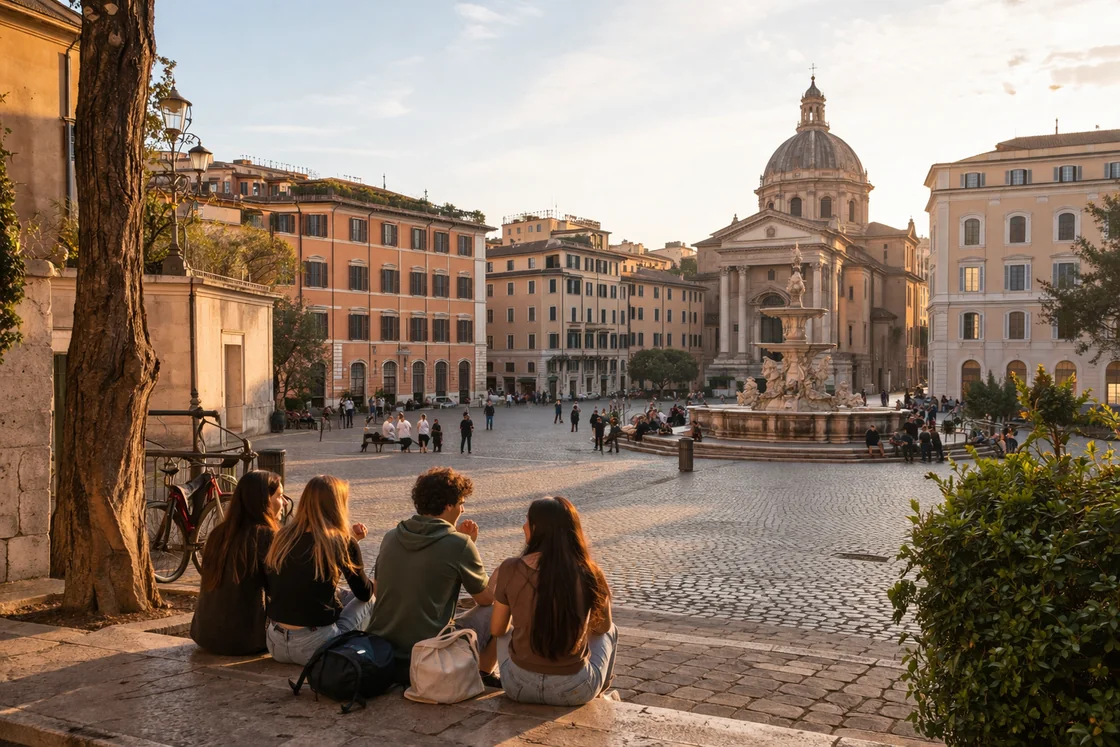
Rome has one of the strongest student and Erasmus event layers in Italy, but the city is too spread out to navigate well through generic listings alone. Many of the best plans move through neighborhoods, Erasmus circles, university groups, local bars, language exchanges and repeated word of mouth.
That means better event discovery starts with context. You need to know which parts of Rome fit your social style, what kinds of events students actually repeat, and how to avoid wasting time on plans that look visible but do not lead to any continuity.
To keep this page connected to the broader cluster, start from the Erasmus cities hub or return to the Unera homepage. Then compare this event guide with the broader city page for Erasmus in Rome, the practical guides on how to meet Erasmus students, how to make friends during Erasmus and how to make friends abroad, plus the product page for the best app for Erasmus students.
Useful for new arrivals who want a fast first step into the city. These events help most when you still need to understand which student circles are worth repeating.
Rome works well for events that combine conversation, drinks and lower-pressure contact. These often create better first interactions than large anonymous nights.
In Rome, the area often matters as much as the official event title. Students usually choose the neighborhood rhythm first, then decide which plan inside it makes sense.
Rome stands out because students often move between aperitivo, bars, piazzas and late plans rather than one formal event with one fixed crowd.
Students in Rome rarely rely on one clean calendar. Discovery often happens across WhatsApp groups, Instagram stories, Erasmus organizers, university circles, promoter pages and friend-of-friend invitations.
That makes the city feel active but scattered. The same evening can offer too many similar-looking plans with very little clarity about which one will actually suit your pace or help you meet the right people.
The strongest approach is to combine this page with the broader city context in Erasmus in Rome, then use focused guidance like how to meet Erasmus students so event discovery leads somewhere useful.
A strong starting point for students because of the connection to Sapienza, affordable bars and the kind of everyday student movement that makes repeated plans easier.
One of the clearest social reference points in Rome for bars, mixed crowds and nightlife formats that can turn into repeatable routines.
Useful for students who want a more alternative route with smaller bars, looser evenings and a crowd that feels less tourist-driven.
A good fit for students who want a more modern nightlife rhythm, easy movement and a neighborhood that connects students with wider city energy.
Rome creates the impression that social life will organize itself because there is always movement somewhere. In practice, too much visible activity can make students drift between plans without building any continuity.
The problem is not lack of events. It is fragmentation, distance, overlap and weak follow-up. Students often see many options but still struggle to understand which ones are most likely to lead to real conversations or repeated contact.
That is why this event page works best as a spoke for the main Rome Erasmus guide and the Erasmus cities hub: it narrows a broad capital-style city into a more useful event-intent path.
Rome rewards students who use events as starting points instead of isolated nights. The city becomes easier when you treat each plan as part of a repeatable social map.
A smaller set of event types you actually enjoy is more useful than chasing every visible plan across the city.
The same people often circulate through the same evening zones. Repetition gives you better odds of seeing familiar faces again.
Rome often works through longer conversations, walks, after-plans and neighborhood overlap. Use that slower rhythm to turn first contact into something repeatable.
Rome is too broad for that. Broaden the search, then narrow it based on fit, distance and repeatability.
This event page works better when paired with Erasmus in Rome, because events make more sense once you understand the neighborhoods and city-wide student rhythm.
If your main goal is meeting people, lower-friction events usually beat large anonymous nights out.
The strongest support pages after this one are how to make friends during Erasmus and how to make friends abroad.
Use one Erasmus app to discover events and student context in Rome without depending on scattered channels alone.
Rome gives you volume and distance. Unera helps you focus on the people and plans that are more likely to fit your pace.
The app helps reduce the gap between first contact and repeated interaction, which matters more than just finding another event.
Use Unera to find events, meet students and turn Rome's social energy into real momentum.