Erasmus country guide
Erasmus in Italy: cities, student life, costs and how to build a social semester
Italy is one of the strongest Erasmus countries for students who want university history, visible city life, strong social routines and very different destination types inside one country. This pillar page connects every Italian city guide in the Unera cluster and helps you compare Italy with other Erasmus destinations.
Country pillar
Introduction to Erasmus in Italy
Erasmus in Italy works because student life is rarely separated from the city. Students do not only move between campus buildings and accommodation. They meet through piazzas, aperitivo routines, university streets, local bars, language exchanges, ESN activity, class groups, short trips and repeated neighborhood habits.
For students searching for erasmus Italy, Erasmus in Italy, study abroad Italy or international students Italy, the most important decision is not only the country. It is the type of Italian city that fits your semester. Bologna, Cagliari, Florence, Genova, Milan, Padova, Pavia, Perugia, Rome, Salerno and Sassari all offer different versions of student life in Italy.
Use this page as the top-level SEO entry for Italy, then move into the city guides when you need local detail. The full country system starts from the Erasmus countries hub, while the city directory sits at Erasmus cities.
Why Italy
Why choose Italy for Erasmus
City life is part of student life
Italy gives Erasmus students a rare mix of academic depth, city life and everyday social rituals. The country works especially well when you want student life to happen outside formal campus spaces too.
One country, several Erasmus types
The biggest advantage is range. Bologna and Padova are dense university cities, Genova and Cagliari are coastal but socially different, Milan and Rome are larger and more international, Pavia and Perugia are smaller academic options, Florence is compact and polished, Salerno is calmer and local, and Sassari adds a smaller northern Sardinian route.
Strong semester identity
Study abroad in Italy usually leaves students with a clear sense of place. Food, language, trains, local habits, university streets and repeated social spaces all become part of the semester, not just background scenery.
Student life
Student life in Italy
Repeated routines matter
Student life in Italy usually grows through repetition. Coffee after class, aperitivo, shared dinners, walks through central areas, recurring student nights and association events often matter more than one large event calendar.
Social circles form in layers
International students in Italy should expect a mixed social environment. Some circles form through university and ESN groups, others through housing, language exchanges, local friends, sports, trips and nightlife routines.
The first two weeks matter
Students who say yes to simple plans early usually build social momentum faster than students who wait for the perfect event or rely only on large public group chats.
Cost of living
Cost of living in Italy for Erasmus students
Costs change by city
The cost of living in Italy depends heavily on the city and on housing timing. Milan and Rome are usually the most demanding in the Unera Italy cluster, Genova and Padova can still put pressure on rent, while Pavia, Perugia, Salerno, Cagliari and Sassari can feel more manageable if housing and transport are planned well.
Rent is the main pressure point
Start housing early, verify distance to campus and social areas, and avoid choosing accommodation only because it looks central on a map. In Milan, Rome and Florence, a bad commute can make student life feel more expensive and less social.
Daily habits decide the budget
Food and daily life can be manageable when students use supermarkets, university canteens, shared cooking and local routines. Social spending is easier to control when aperitivo, house dinners, parks, walks and smaller events are part of the week.
Best cities for Erasmus in Italy
Choose the Italian city that fits your student rhythm.
This is the country pillar for all Italian city pages. Every city below has its own local guide, and each guide links back to this Italy page.
Bologna is the densest student-city option in the Italy cluster, best for walkable routines, visible university life and fast social familiarity. Choose it if you want a classic Erasmus city where student life is central and easy to enter.
Cagliari is a Sardinian capital where student life moves between UniCa, the city center, Monserrato, Poetto and association-led Erasmus activity. Choose it if you want sea access, capital-city services and more scale than a small town.
Milan is Italy's broadest international hub, with major universities, nightlife variety, creative neighborhoods and more professional energy. Choose it if you want scale, variety, international circles and a bigger-city rhythm.
Rome is a large cultural city where student life is spread through universities, historic neighborhoods, nightlife zones and city-wide movement. Choose it if you want cultural range and a semester that feels bigger than campus.
Florence is compact, walkable and strongly international, with student life that overlaps with culture, cafes, squares and evening routines. Choose it if you want a smaller city with high international visibility and easy daily proximity.
Genova is a coastal university city where student life moves between the port, the center, scattered faculties and repeated urban routines. Choose it if you want a more layered Italian semester with sea access and a real city feel.
Padova is one of Italy's clearest university cities, with strong academic identity, bike-friendly routines and a visible incoming-student layer. Choose it if you want a classic university-city rhythm with scale but without the sprawl of the biggest metros.
Pavia is a compact university town shaped by colleges, courtyards, center-based routines and a lower-pressure social rhythm. Choose it if you want a calmer academic town where repeated contact matters more than crowd size.
Perugia is a hilltop university city with a strong international-language layer, center-led nightlife and manageable daily routines. Choose it if you want an international medium-size city with more intimacy than a major hub.
Salerno is a calmer southern route with seaside life, a more local rhythm and student routines split between the city and the university area. Choose it if you want a warmer, more personal semester with less big-city pressure.
Sassari is a smaller Sardinian university city where social life grows through welcome events, repeated circles, ESN activity and island context. Choose it if you want Sardinia, local continuity and a lower-pressure Erasmus environment.
Universities
Universities in Italy that shape the Erasmus ecosystem
Italy has a strong university ecosystem for Erasmus and study abroad students, including historic public universities, technical institutions, business schools, arts schools and specialist academies.
University of Bologna
University of Cagliari
University of Genoa
Politecnico di Milano
University of Milan
University of Padua
University of Pavia
University of Perugia
University for Foreigners of Perugia
Sapienza University of Rome
Roma Tre University
University of Florence
University of Salerno
University of Sassari
Events and social life
Erasmus events in Italy are real, but discovery is fragmented.
Where events appear
Erasmus events in Italy are often spread across ESN chapters, university groups, Instagram pages, WhatsApp chats, student associations, local venues, language exchanges and friend-of-friend invitations.
What actually works
The most useful events are the ones that create follow-up. Welcome weeks, international meetups, aperitivo nights, city walks, day trips and smaller recurring plans are often better for building friendships than one-off big nights.
Meet students
How to meet students in Italy
-
01
Start from university entry points
Go to welcome events, join class groups and use early ESN activity even if the plan feels basic. The first weak ties often become the useful ones later.
-
02
Turn the city into repeatable routes
In Milan and Rome, reduce the city into two or three usable neighborhoods. In Bologna, Padova and Florence, use compactness. In Genova, choose your districts early. In Pavia, Perugia, Salerno, Cagliari and Sassari, use campus circles, local groups and smaller recurring plans.
-
03
Use tools for follow-up
Read how to meet Erasmus students and how to make friends during Erasmus before the first weeks drift. Use Unera as an Erasmus student app when nearby people and events are scattered.
Nightlife and culture
Nightlife in Italy is not only clubbing.
Aperitivo and piazza life
For many Erasmus students, the real social layer is aperitivo, piazza movement, neighborhood bars, house dinners, cultural events, late walks and casual group plans after class.
Different cities, different nights
Bologna and Milan are the strongest nightlife contrasts: Bologna is dense and student-led, while Milan offers more formats and more spread. Rome, Florence, Genova and Padova add different urban or cultural atmospheres, while Pavia, Perugia, Salerno, Cagliari and Sassari are better for lower-pressure social routines.
Culture becomes social
Museums, historic centers, music, food, language, trains and weekend trips all become social tools when students use them to repeat contact rather than only consume the destination.
Practical tips
Practical tips for Erasmus in Italy
Housing
Start early, verify commute times, avoid paying before checking legitimacy, and ask whether the area works for both university and social life.
Visa and residence
EU and non-EU students follow different processes. Non-EU students on longer stays should check their university, consulate and official Italian guidance before arrival and keep copies of documents.
Transport
Trains are useful for weekend trips and city comparison, while local transport quality varies by city. In bigger cities, location matters because commuting can shape social life.
Lifestyle
Learn basic Italian phrases, use university canteens where available, keep cash and card options, and expect some admin steps to require patience and in-person follow-up.
Comparison
Italy vs other Erasmus destinations
Italy vs Spain
Italy often feels more varied by city type, while Spain can feel more consistently late-night and social across major student destinations. Compare Italy with Spain if nightlife timing, weather and group culture are priorities.
Italy vs France
Italy can feel easier for casual outdoor routines in many cities, while France may feel stronger for highly structured academic prestige and metropolitan options such as Paris. Compare Italy with France if language, admin and city scale matter.
Italy vs Germany
Italy is usually warmer and more informal socially, while Germany can feel more structured, transport-focused and internationally practical in cities such as Berlin and Cologne. Compare Italy with Germany if efficiency and cost predictability matter.
How Unera helps
Use the country page to choose the route. Use Unera to build momentum.
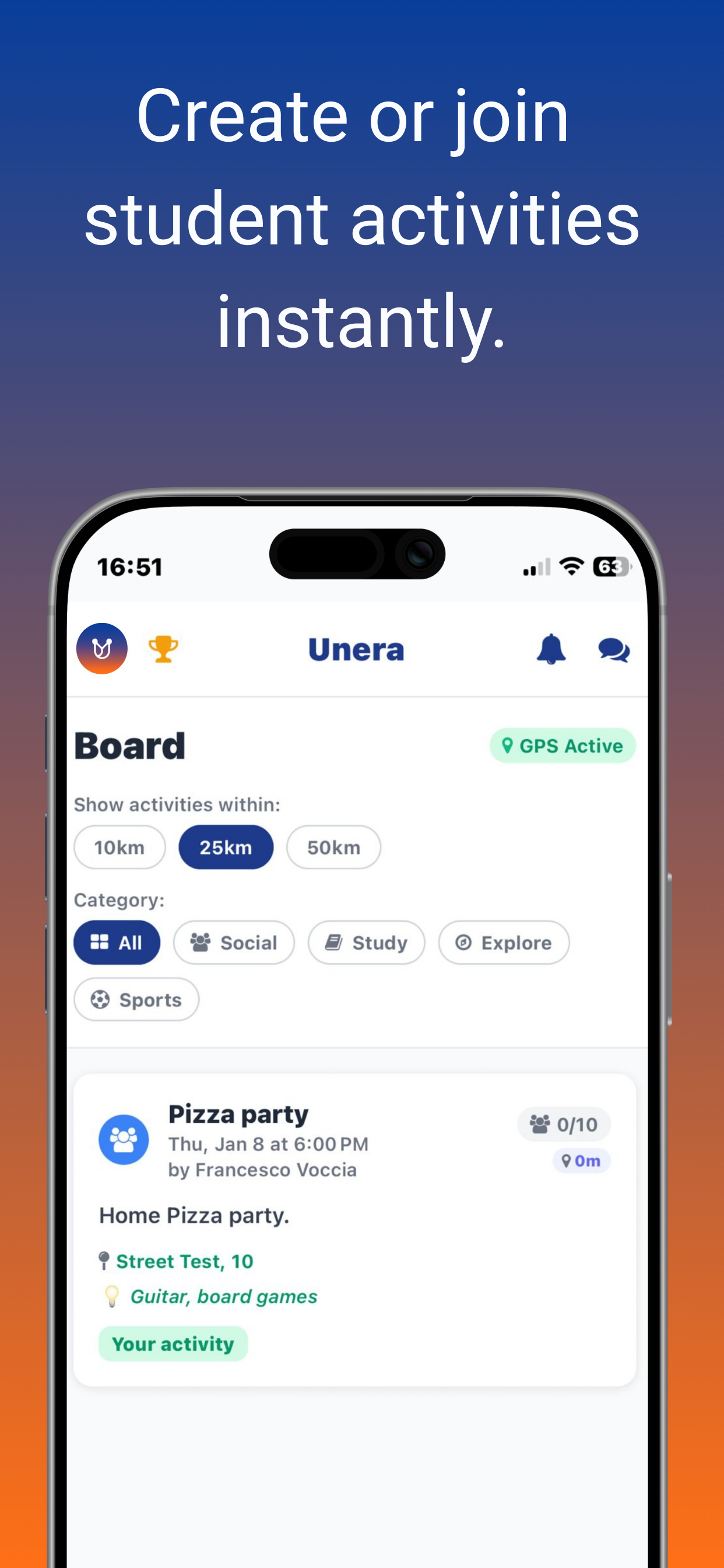
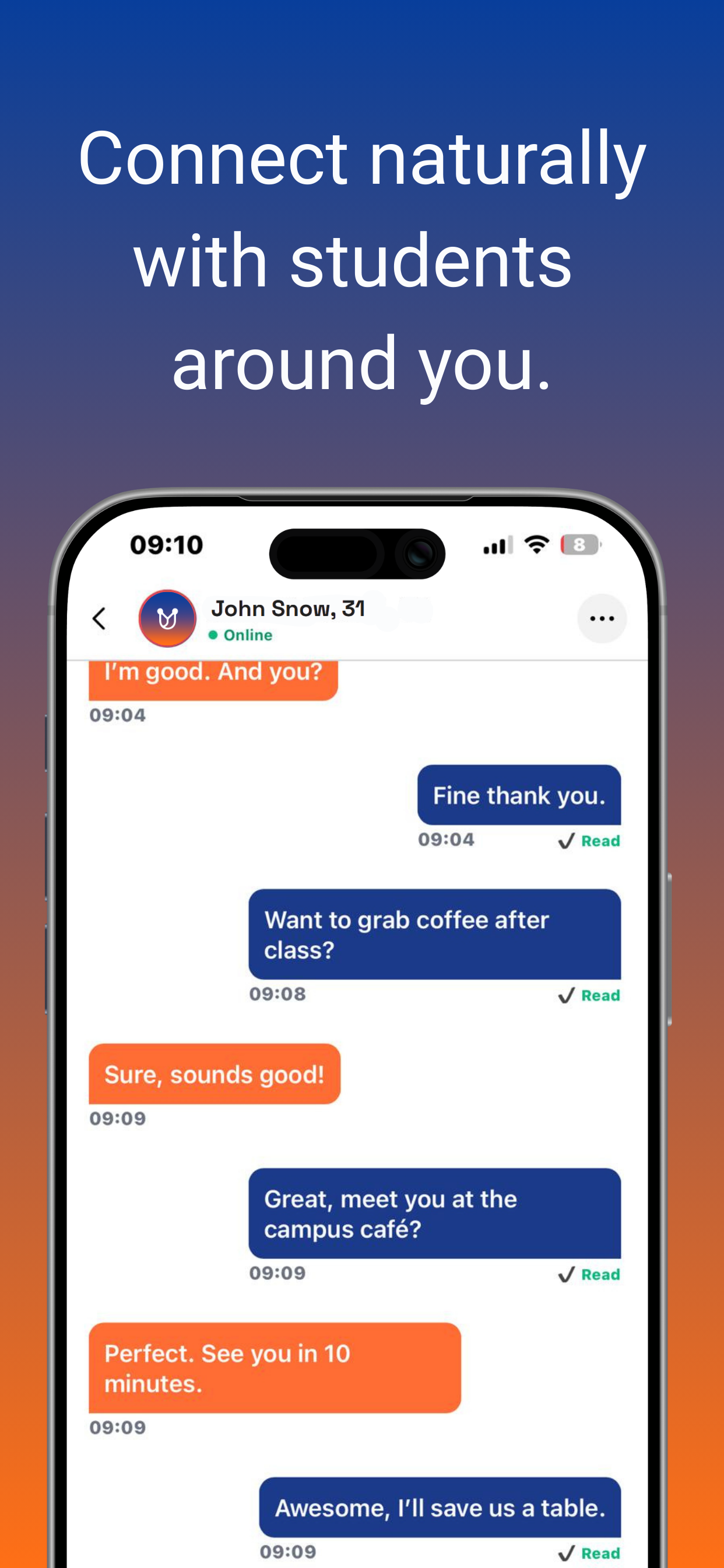
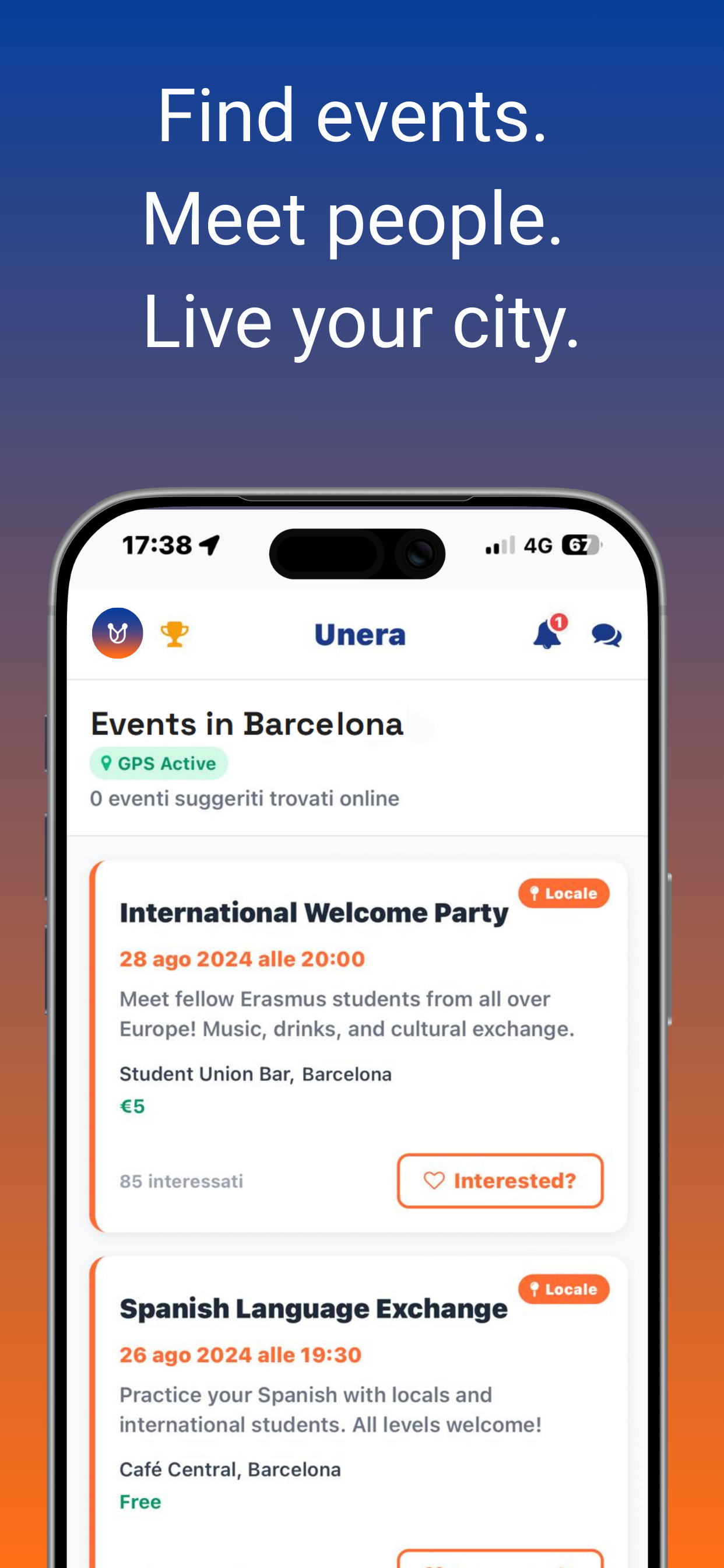
Unera is built for the part of Erasmus that generic guides do not solve: finding nearby students, discovering plans, starting conversations and keeping momentum after the first week.
In Italy, this is especially useful because social life is fragmented. Students move through university circles, city routines, events, local chats and neighborhood habits. Unera brings the people and plan layer closer together.
1Find nearby students
See people around your city with social context, not anonymous lists.
2Discover plans
Find events and activity around the routines students actually use.
3Keep contact moving
Turn first meetings into chat, follow-up and a real student routine.
FAQ
Useful questions about Erasmus in Italy
Is Italy good for Erasmus students?
Yes. Italy is a strong Erasmus country for students who want visible city life, strong university ecosystems, social routines, culture, food, travel options and very different city types inside one country.
What are the best Erasmus cities in Italy?
Is studying abroad in Italy expensive?
Italy varies heavily by city. Milan and Rome are usually more demanding, Genova and Padova can still pressure rent, while Pavia, Perugia, Salerno, Cagliari and Sassari can be more manageable. Housing timing, commute distance and social spending habits matter more than generic country averages.
How do Erasmus students meet people in Italy?
Most students meet people through welcome events, class groups, ESN activity, housing, aperitivo, language exchanges, local bars, trips and repeated neighborhood routines. Tools like Unera help connect nearby students and events when channels are fragmented.
Is Italy better than Spain for Erasmus?
It depends on the student. Italy is excellent for culture, varied city types and university history, while Spain often feels more consistently late-night and socially direct. Compare the full
Spain guide.
Do international students need a visa for Italy?
EU and non-EU students follow different rules. Non-EU students should verify the study visa and residence process with their host university, consulate and official Italian guidance before arrival, especially for stays longer than 90 days.
Download
Download Unera before your Erasmus in Italy starts
Use Unera to discover nearby students, find events and turn your first weeks in Italy into real social momentum.