


Gracia
Gracia is one of the strongest areas for students who want a neighborhood with local identity, bars, plazas and a social atmosphere that feels lively without becoming too tourist-heavy.
Barcelona is one of the strongest Erasmus destinations in Europe for students who want sea, nightlife, international energy and a city where student life blends with everyday movement. This guide explains how Barcelona works in practice, where students actually spend time and how to build momentum faster once you arrive.
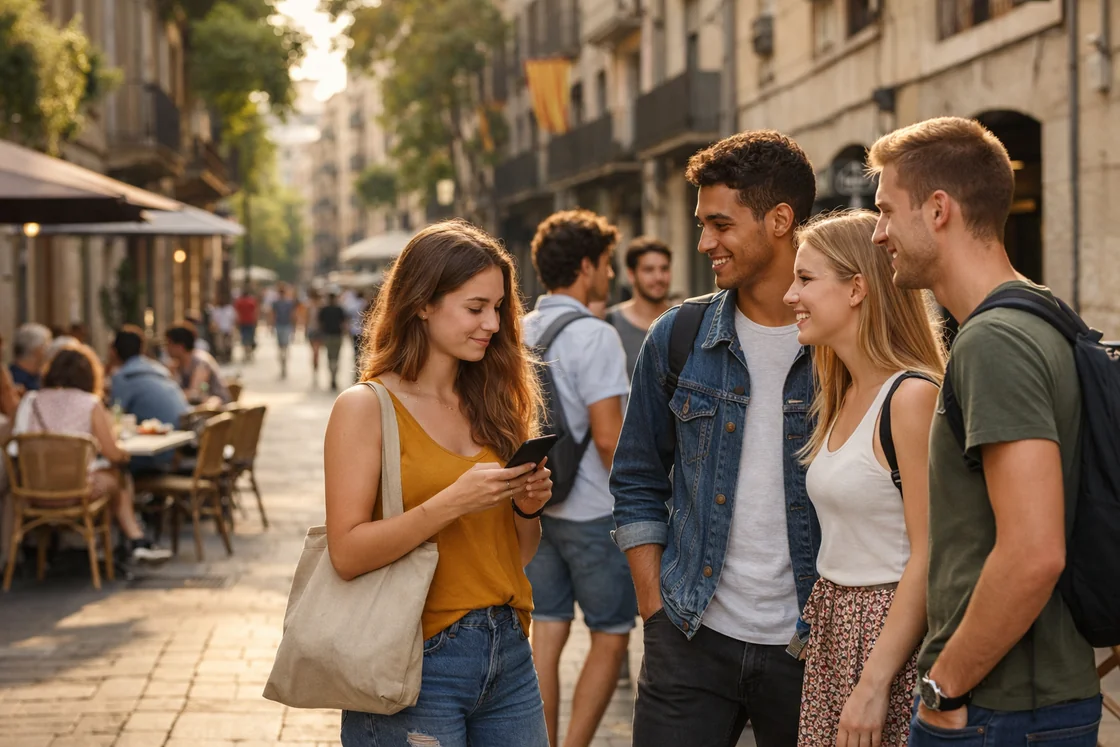
Barcelona is one of the strongest Erasmus destinations in Europe for students who want a city with constant movement, strong international presence and a social life that extends naturally from daytime routines into nightlife. Universities, beaches, neighborhoods, bars and public spaces all play a role in how student life works here.
That makes Barcelona attractive for Erasmus and international students who want a semester that feels dynamic from the beginning. The city offers more immediate social energy than many destinations, but it also requires some selectivity because the social map is broad and not every area or plan fits the same student style.
In practical terms, Barcelona is best for students who want an international city, strong nightlife and a semester with visible outdoor and neighborhood-based social life. You may prefer Lisbon if you want a slightly softer rhythm and lower-pressure social pace, Milan if you want more structured international city life, or Bologna if you want a denser university-centered routine.
If you want the wider map first, start from Erasmus in Spain, the Erasmus cities hub or return to the Unera homepage. For the practical side of settling in, read how to meet Erasmus students, how to make friends during Erasmus and how to make friends abroad. If you are comparing tools for the social side of Erasmus, see the best app for Erasmus students.
Barcelona works especially well as a comparison city because it shows what happens when student life is highly international and socially visible without depending on one single university core. If you want to compare it directly, also open Erasmus in Lisbon and Erasmus in Milan.
Student life in Barcelona feels immediate because the city gives you visible social energy from the start. Beaches, plazas, university routines, bars and outdoor movement all help students feel that things are happening around them without much effort.
The advantage is that social life is highly accessible. You do not need to wait for a formal event to feel part of the city, because daily routines already create meeting points. The challenge is that Barcelona also has a lot of surface-level activity, so students still need to find the neighborhoods and circles that fit them.
Students who do well in Barcelona are usually the ones who turn broad city energy into repeatable local routines. The city gives plenty of openings, but social depth still comes from continuity.
Gracia is one of the strongest areas for students who want a neighborhood with local identity, bars, plazas and a social atmosphere that feels lively without becoming too tourist-heavy.
Poblenou works well for students who like a more modern and coastal side of Barcelona. It is useful for beach access, daytime routines and a social life that feels more open and spread out.
Eixample is central to student life because it connects many daily routes, nightlife plans and social opportunities. It is practical, connected and often part of how students move through the city.
These central areas matter because they offer constant activity, but they require more selectivity. They can be useful socially, especially at the start, but not every student wants them as the core of their routine.
The University of Barcelona is one of the main academic anchors behind local student life, helping create a broad and internationally visible student presence across the city.
UAB adds major student volume and international movement to the wider Barcelona ecosystem, even when the practical student routine extends beyond the city center.
Pompeu Fabra helps shape a more international and urban student profile, especially for students who want strong city integration alongside academic life.
UPC adds another important route into Barcelona's student ecosystem and strengthens the city's role as a major destination for exchange and international students.
Barcelona has one of the strongest event layers in the Erasmus context, but that does not automatically make discovery simple. Students often face a mix of beach plans, nightlife promoters, Erasmus groups, language exchanges, university circles and neighborhood-specific routines.
If events are your starting intent, open student events in Barcelona for a more focused view of neighborhoods, event types and why discovery feels fragmented even in a city with constant visible movement.
The students who get the most out of Barcelona usually do not treat every event as equally important. They find a few recurring formats and areas that fit their pace, then use those to create repeated contact.
This is the critical section because Barcelona is socially open, but that openness can stay superficial if students never turn it into repetition. The city becomes easier once you know which areas, times and social formats actually produce continuity.
In Barcelona, it helps to focus on areas where students naturally keep showing up. Gracia, Eixample and parts of Poblenou work well because they create more than one chance to meet the same kind of people.
A social plan in Barcelona is most useful when it helps you narrow the city into something repeatable. For the broader process, read how to meet Erasmus students.
Barcelona makes it easy to keep moving from one plan to the next, but momentum grows faster when you return to the same circles and neighborhoods. This is why making friends during Erasmus often depends on repetition more than on novelty.
The city becomes easier once you combine real neighborhoods with a tool that helps you understand who is nearby and what is worth joining. Unera helps reduce the friction between discovery, timing and follow-up.
Nightlife in Barcelona is one of the main reasons students choose the city, but it is not only about clubs. Bars, beaches, terraces, plazas and neighborhood evenings all shape how social life works.
That makes Barcelona especially good for students who want a social life that feels visible and varied. The city can support casual evenings, larger nights out and more spontaneous plans with less effort than many destinations.
The important point is that nightlife in Barcelona works best when it becomes part of your routine instead of a series of disconnected big nights. Once you know your neighborhoods, the city becomes much easier to enjoy consistently.
Barcelona feels better once you stop treating it as one giant social field and start picking the neighborhoods, routines and timings that fit you.
The best moment to read how to make friends abroad is before Barcelona becomes a sequence of good-looking plans without real continuity.
Barcelona is best for students who want visible social energy, nightlife and an international city rhythm. If you want a softer pace and a slightly calmer version of that lifestyle, Lisbon may fit better. If you want a denser university-centered routine, Bologna can be the stronger match.
Barcelona gives you social volume, but not always clarity about who is relevant around you. Unera helps turn city-wide energy into more useful local context.
The app helps reduce the usual friction of Barcelona student life: too many chats, promoters and half-visible plans across the same city.
Barcelona rewards students who can turn one good plan into repeated contact. Unera helps you keep momentum after the first event, beach plan or conversation.
Use Unera to discover students, find events and turn your first weeks in Barcelona into real momentum.