


Südweststadt
A practical base for KIT-linked students who want strong tram access, daily convenience and quick movement toward the center.
Karlsruhe is a research-led Erasmus city where campus routines, trams and bike-friendly districts make social life easier once you know which student areas actually repeat.
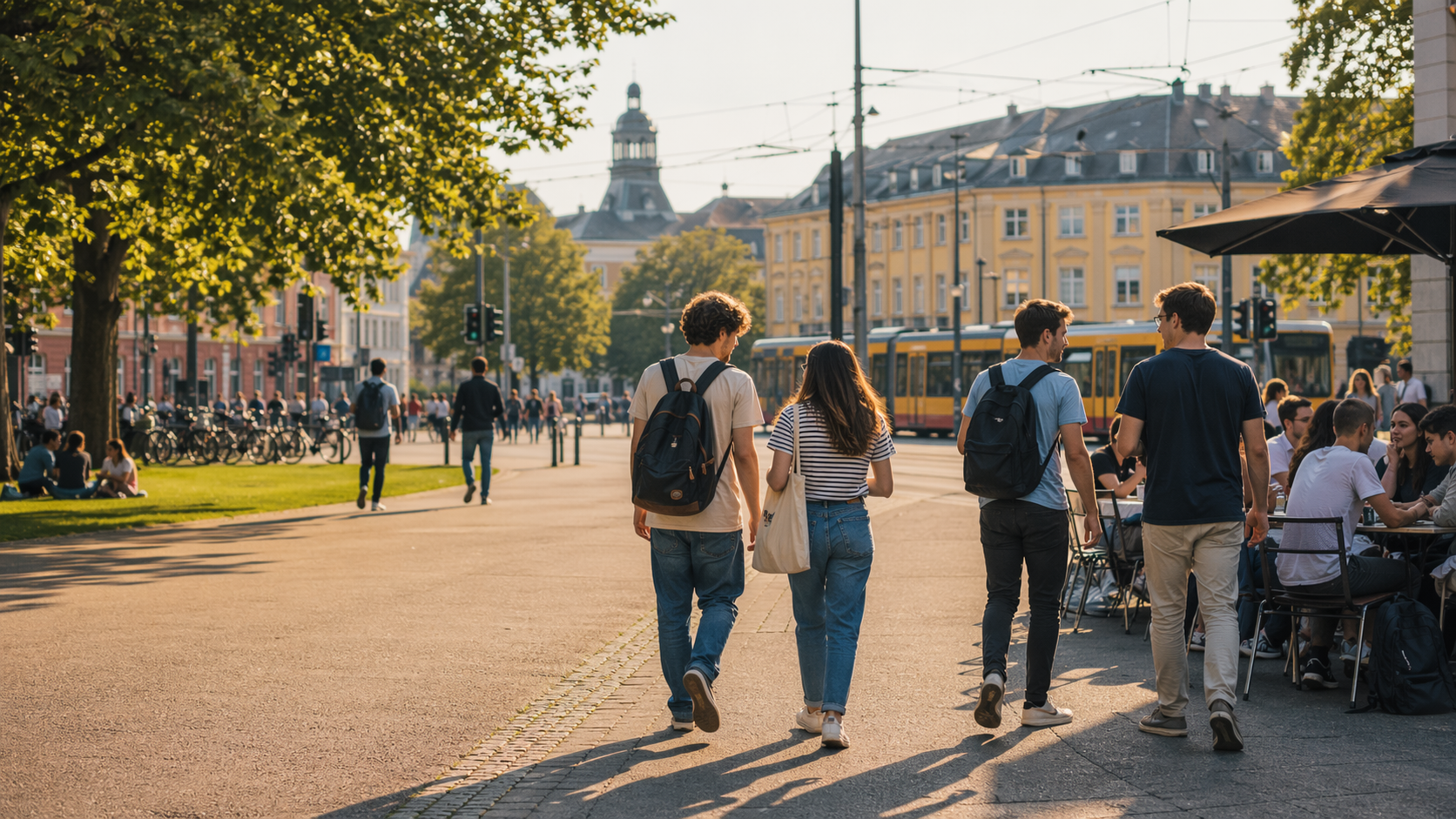
Karlsruhe is a research-led Erasmus city where student life is shaped less by tourism and more by campus rhythm, trams, bikes and repeated local plans. It works well for students who want a German semester that feels organized, social enough and easier to read than a larger capital.
Most newcomers build their circle through KIT exchange orientation, ESN Karlsruhe activity, faculty groups, Schlossgarten meetups, language cafes and nights that move between Kaiserstrasse, Oststadt and Sudweststadt instead of one huge city-center scene.
This page sits inside the Erasmus cities hub, links back to the Unera homepage. Before arrival, read how to meet Erasmus students, how to make friends during Erasmus and how to make friends abroad. If you are comparing tools for the social side of exchange, open the Erasmus student app page as well.
Karlsruhe is a useful comparison city: more technical and structured than Cologne, less scenic but easier to map than Heidelberg, and usually calmer than Stuttgart. If you want another compact German route with strong academic routine, compare it with Tübingen as well.
Student life in Karlsruhe usually grows through routine instead of spectacle. Classes, tram rides, bike routes, mensa lunches, student bars and Schlossgarten plans matter more here than constant event-hopping.
That makes the city useful for students who want a semester that feels stable quickly. Karlsruhe is not hard socially, but it rewards students who keep repeating the same districts, societies and post-class habits until the city becomes familiar.
Compared with Heidelberg, Karlsruhe feels more technical, flatter and less postcard-driven. Compared with Stuttgart, it is usually easier to read socially because the map is smaller. Compared with Tübingen, it feels more city-like and less centered on one university tradition.
A practical base for KIT-linked students who want strong tram access, daily convenience and quick movement toward the center.
Useful for bars, cafes, student flats and easy access to campus routines without relying on the busiest central streets.
The clearest central corridor for student movement, casual evenings, errands and first-week orientation.
Good for a more mixed local feel, practical housing and nights that feel social without being over-curated.
A slightly separate but useful option for students who want a calmer residential base and do not mind using tram routes intentionally.
KIT is the main academic anchor behind the city's Erasmus scene, especially through exchange orientation, faculty networks and the daily density around its core campus.
HKA adds another applied, international student layer and broadens the city beyond one single university identity.
HfG Karlsruhe helps connect the city to a more creative and cultural student current, especially around mixed events and alternative venues.
DHBW adds another route into the student ecosystem, particularly for students whose rhythm mixes academic structure with practical training paths.
Karlsruhe has a useful Erasmus event layer built around KIT orientation, ESN Karlsruhe activity, language cafes, faculty introductions, bar crawls and seasonal park or Schlossgarten meetups.
The city works best when students use events to identify a repeatable routine. A welcome party matters less than the people you see again at the same language cafe, student bar or after-class hangout.
Use events as entry points, not the whole strategy. Karlsruhe is usually more about steady follow-up than one huge night that solves the whole semester.
Karlsruhe rewards students who combine official exchange entry points with a few repeatable districts and weekly habits. The city becomes social quickly once it stops feeling purely functional.
Use KIT and HKA orientation, ESN Karlsruhe, faculty welcomes and language programmes first. They give you your first layer of contacts before the city settles into routine.
Repeat areas such as Oststadt, Innenstadt-West, Südweststadt and the campus-Schlossgarten loop. For the wider process, read how to meet Erasmus students.
After a large welcome event, suggest a smaller next step such as lunch, a coffee near campus, a Schlossgarten walk or one regular student bar. In Karlsruhe, that is usually how acquaintances become real contacts.
The city gets easier when nearby students and relevant plans are visible without checking five channels at once. Unera helps connect Karlsruhe's campus life to actual follow-up and conversation.
Nightlife in Karlsruhe is smaller than in Berlin or Cologne, but that is part of the advantage. Students can repeat the same bars and districts more easily, which often makes social progress faster.
Kaiserstrasse, Oststadt and nearby mixed districts matter most for regular student evenings, while larger nights usually depend on timing, specific venues or event calendars rather than one permanent city-wide strip.
The strongest semesters in Karlsruhe usually mix bars, campus plans and small-group routines. Students who only wait for major nightlife often underestimate how social the city can be.
Karlsruhe feels much smaller once you know the routes between home, campus and your two or three social districts.
Do not insist on one perfect central street. A tram-linked flat often works better than a delayed search for the ideal address.
Sundays are quiet, paperwork matters and social life often forms around regular weekly habits rather than permanent spontaneity.
One language cafe, one student bar or one association can do more for social momentum than a long list of unconnected events. For more structure, use how to make friends during Erasmus.
Karlsruhe has enough student density to be social, but it is split across technical, applied and creative institutions. Unera helps you see nearby Erasmus and international students with more context than a generic chat thread.
The app helps turn scattered events and society plans into follow-up. That matters in Karlsruhe, where steady repetition usually matters more than spectacle.
Unera works best as the layer between campus and the city. It helps keep chat alive, connect districts and turn a functional student map into real social continuity.
Use Unera to discover students, find local events and turn your first weeks in Karlsruhe into repeatable social momentum.