
Tirana carries most of the live student energy
Student life in Albania is concentrated most clearly in Tirana, where after-class routine usually grows through cafes, terraces, neighborhood bars, university circles and repeat evening movement.
Albania is one of the lower-cost and lower-friction study abroad routes in southeast Europe, especially for students who want a compact capital, visible cafe culture and a semester that feels social without western-European price pressure. This pillar page connects the live Tirana guide in the Unera cluster and helps you compare Albania with other Erasmus destinations.
Erasmus in Albania usually means choosing a smaller, more compact study abroad route than Italy, Spain, France or Germany. The country does not give the same number of large-city options, but it can give something many students actually want: lower daily pressure, a readable social map and a semester where the capital matters more than constant intercity comparison.
For students searching erasmus Albania, erasmus in Albania, study abroad Albania, student life Albania or international students Albania, the real question is whether you want a semester built around Tirana's cafe culture, university routines, lower living costs and easier day-to-day scale. In the live Unera cluster, Tirana is the active city entry point because it concentrates the strongest mix of universities, exchange mobility and visible student life.
Use this page as the top-level SEO entry for Albania, then move into the Tirana guide when you need local detail. The full country system starts from the Erasmus countries hub, while the city directory sits at Erasmus cities.
Albania works well for students who care about affordability, easier daily movement and a semester that feels usable quickly instead of logistically heavy from day one.
Tirana is the real advantage of the route. Students can move between universities, cafes, terraces and nightlife areas without the commuting friction that often slows social life in larger capitals.
Albania does not offer the same depth of city choice, academic range or international saturation as Italy, France, Germany or Spain. It works best for students who want a more personal semester, not the most famous one.
Student life in Albania is concentrated most clearly in Tirana, where after-class routine usually grows through cafes, terraces, neighborhood bars, university circles and repeat evening movement.
International students in Albania should expect a social environment where class groups, shared housing, mutual contacts and repeated low-pressure plans often matter more than one oversized official exchange system.
In smaller ecosystems, a second and third meeting usually matter more than the first welcome night. Students who repeat places early build momentum faster.
Albania often feels cheaper than larger western-European Erasmus destinations, which is one of the main reasons it enters the comparison set for students thinking about budget and lifestyle together.
Central Tirana can still put pressure on housing, especially in the more nightlife-adjacent areas. Students should compare walkability, bus access and real daily routine before choosing only on price.
Local cafes, bakeries, shared dinners, supermarkets and repeatable social habits usually make Albania feel financially manageable without making the semester feel empty.
This pillar links every active Albania page in the current cluster. Tirana is the only live Albania city guide today, so the country page acts as the top-level entry for the active Albanian city layer without inventing placeholder links.
Tirana is the live Albania city guide in the Unera cluster, strongest for compact capital-city routine, visible cafe culture, universities and lower-friction daily movement. Choose it if you want a smaller, cheaper and more manageable semester without losing everyday social energy.
Albania's Erasmus and international-student ecosystem is centered on Tirana, where the country concentrates its most visible public and private higher-education institutions.
Students usually find plans through university international offices, class circles, student associations, Instagram pages, WhatsApp groups, language meetups, cafes, bars and friend-of-friend invitations.
Small terrace gatherings, language exchanges, lake-area walks, live music and recurring bar nights often work better than one oversized party because they are easier to repeat inside a compact city.
Open Erasmus in Tirana when you already know the route. The country page stays broad so the city guide can explain local behavior without thin support pages.
Orientation, faculty contacts, class chats and student associations create the first layer of names, invitations and recurring plans.
Pick two or three areas you can really use in Tirana instead of trying to cover the whole city. Social momentum comes from familiarity, not coverage.
Read how to meet Erasmus students and how to make friends during Erasmus, then use Unera as an Erasmus student app when discovery is scattered across local chats and informal invitations.
Cafes, terrace bars, dinners, evening walks and live music often matter more than pure clubbing. That makes Albania especially readable for students who prefer lower-friction social entry.
Tirana combines the broadest mix of bars, universities, embassies, international offices and central neighborhoods, so it is where most international-student social comparison happens.
Hospitality, language, food, coffee habits and regional trips all become part of the semester when students use them to create repeat contact instead of only consuming the destination.
Start early, verify legitimacy and check whether the area works for both university and evening routine instead of choosing only the cheapest room on paper.
EU and non-EU students follow different processes. Students who need a visa should verify the Albanian Ministry for Europe and Foreign Affairs and the official e-visa system before departure, and longer stays may involve residence-permit steps after arrival.
Tirana is more walkable and short-distance than larger capitals, but buses and taxis still shape the week. Housing location matters because easy movement creates easy follow-up.
Keep cash and card options, learn a few Albanian phrases, and build a regular cafe or terrace routine early so the city becomes familiar by the second week instead of the second month.
Albania usually feels cheaper, smaller and easier to read, while Italy offers far more city variety, deeper university history and a more established Erasmus infrastructure.
Albania is calmer, smaller and less saturated, while Spain gives more city choice, stronger nightlife density and a broader international layer.
Albania is lower-pressure and more compact, while France usually feels stronger for academic prestige, formal international ecosystems and metropolitan variety.
Albania is usually more informal, cheaper and socially warmer in everyday routine, while Germany can feel more structured, transport-led and predictable across several student cities.
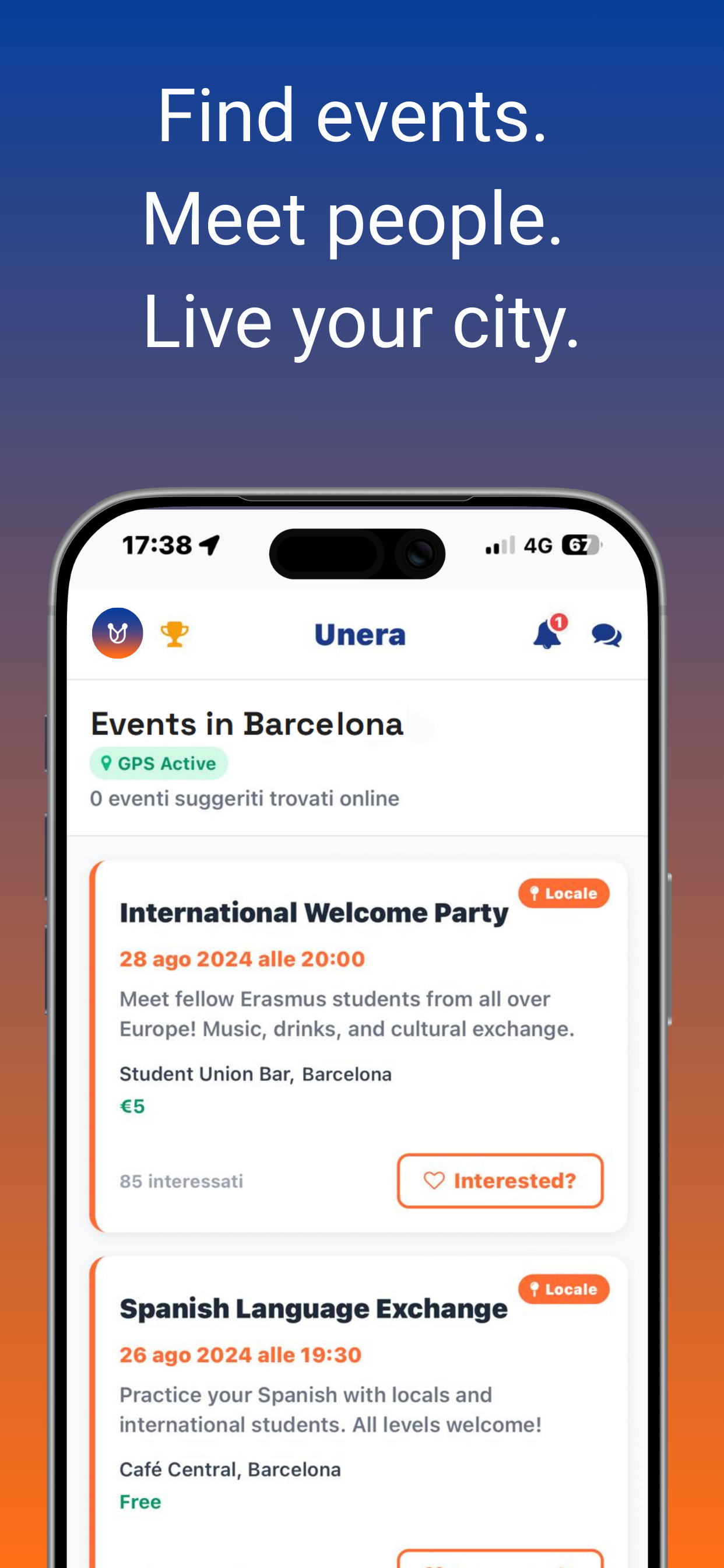
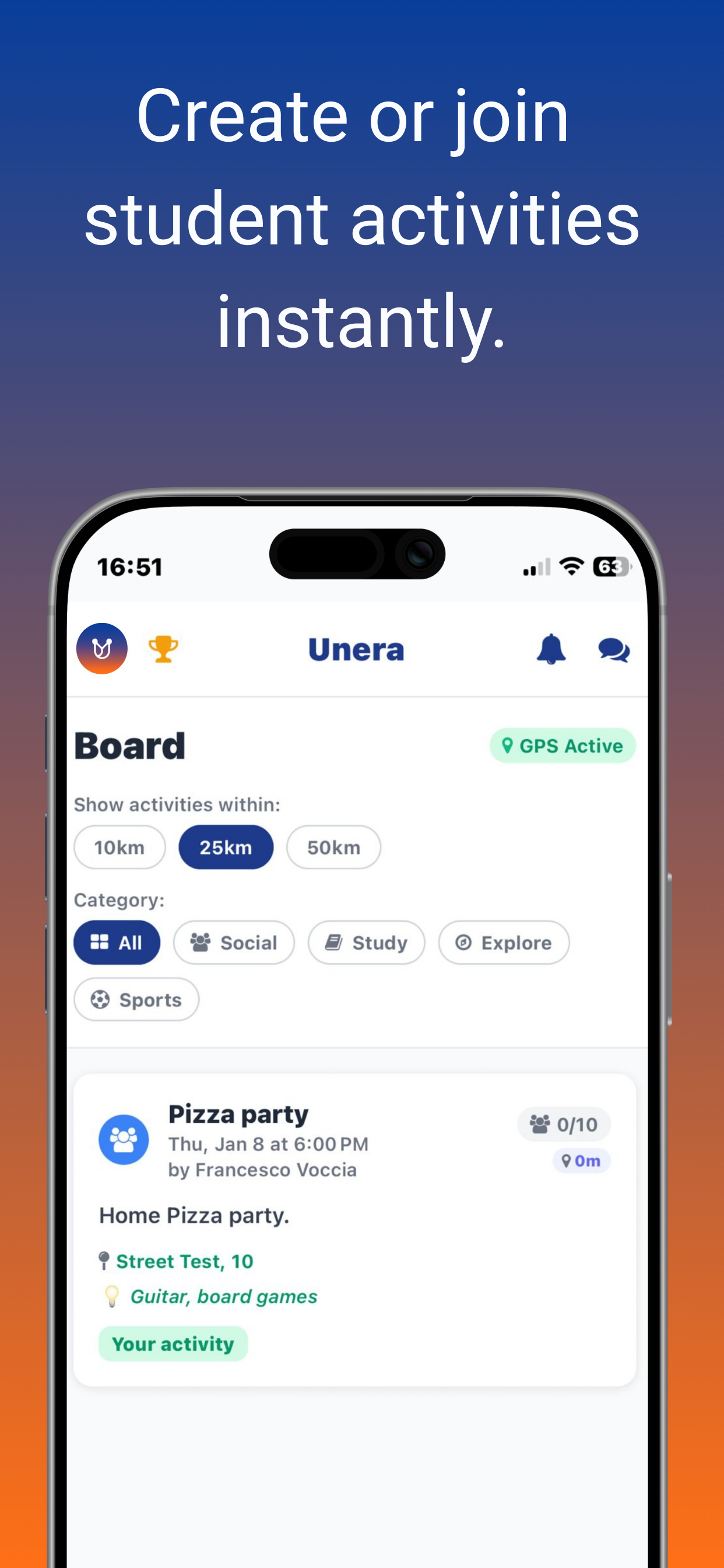
Unera is built for the part of study abroad that generic country guides do not solve: finding nearby students, discovering useful plans, starting conversations and keeping social momentum alive after the first week.
In Albania, this matters because the social map is visible but fragmented. Students move through universities, cafes, terraces, local groups and informal chats. Unera helps bring the people layer and the plan layer together.
See people around your city with more context than a random group chat.
Use local event context and timing to choose plans that are realistic for student life.
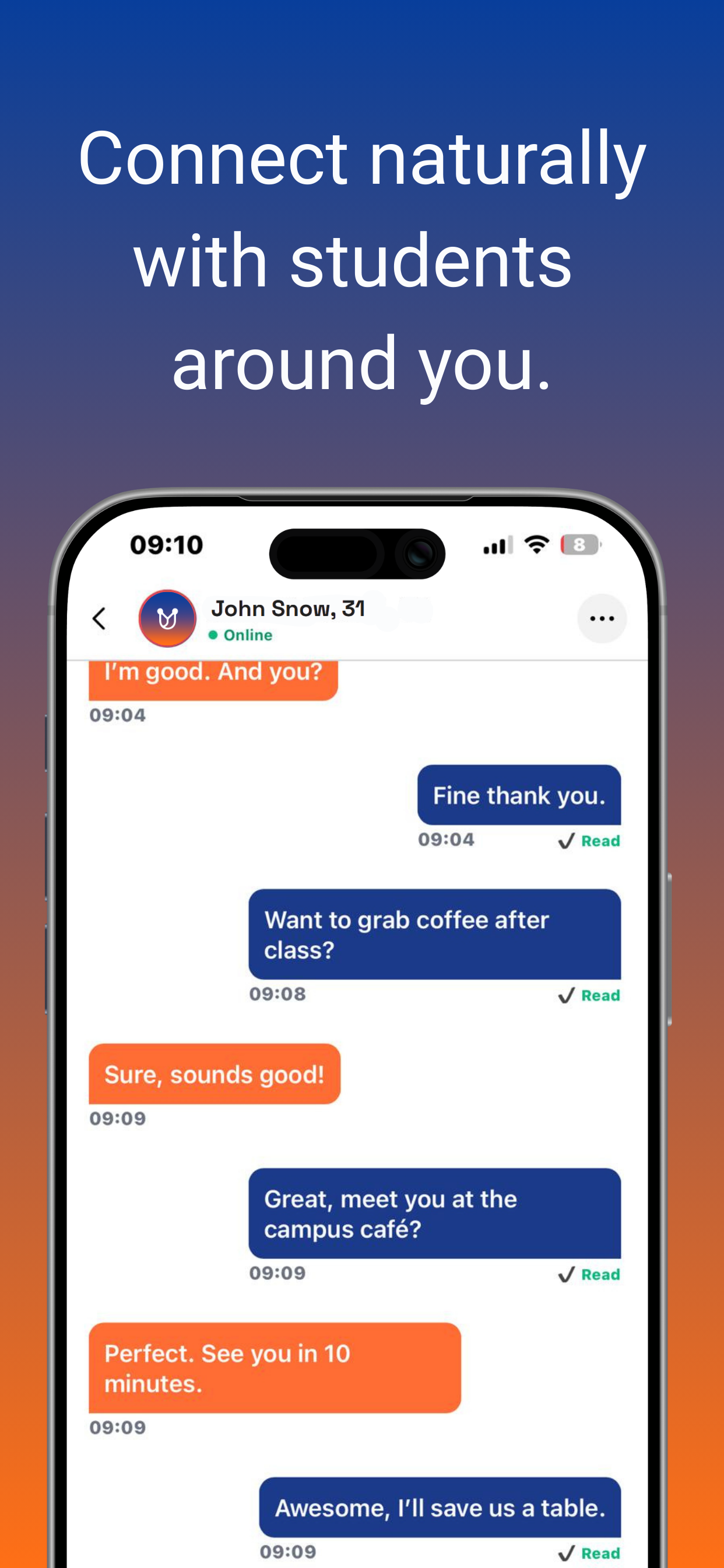
Turn a first coffee, class conversation or bar night into chat, the next plan and a real semester routine.
Use Unera to discover nearby students, find local plans and turn your first weeks in Albania into real social momentum.