
Student life is relationship-based
Student life in Algeria usually grows through universities, scientific clubs, cafes, class groups, faculty contacts, shared housing and repeated neighborhood habits rather than one giant exchange-student machine.
Algerie is a different kind of Erasmus search: lower-volume, more university-led and usually built through Erasmus+ international mobility or bilateral exchange rather than the classic high-density western-European route. This pillar page connects the live Algiers guide in the Unera cluster and helps you compare Algeria with Spain, France, Germany and Italy.
Students searching erasmus Algerie or erasmus in Algerie are usually looking at Algeria through Erasmus+ international mobility, bilateral exchange or broader study abroad options. Algeria is not one of the classic fully associated Erasmus destinations, so the decision is less about choosing from several famous party cities and more about choosing the right university-led route, paperwork process and daily rhythm.
Study abroad in Algeria can work well for students who want a North African academic context, lower daily cost pressure than many western-European capitals, and a semester where universities, language, cafes and repeated local habits matter more than one oversized international bubble. In the live Unera cluster, Algiers is the active city entry point because it concentrates campuses, transport and the clearest international-student layer.
Use this page as the top-level SEO entry for Algerie, then move into the Algiers guide when you need local detail. The full country system starts from the Erasmus countries hub, while the city directory sits at Erasmus cities.
Algerie works best for students who want a lower-volume exchange route where the host institution, campus system and daily routine matter more than ready-made nightlife density.
The official Study in Algeria system presents over one hundred higher-education institutions and a long history of training international students, which means the country has real academic scale even if the Erasmus search market around it is still thin.
Students need to be comfortable with a route that is less plug-and-play than Spain or Italy. Algeria rewards preparation, the right host office and realistic expectations about local rhythm and language.
Student life in Algeria usually grows through universities, scientific clubs, cafes, class groups, faculty contacts, shared housing and repeated neighborhood habits rather than one giant exchange-student machine.
French is often the most practical bridge language for academic and administrative life, while Arabic matters socially and institutionally. Students who adapt to that mixed-language environment settle faster.
The live student map is clearest in Algiers, while Oran and Constantine remain the main comparison cities inside this country guide until dedicated city spokes are added.
Algeria often feels more manageable than France, Spain or Germany on daily cost, which is why it enters the comparison set for students who care about both budget and context.
Official student-services material highlights residences, restaurants and shuttle transport. For exchange students, that can lower everyday pressure compared with destinations where everything depends on the private rental market.
In Algiers especially, a room that looks cheap but disconnects you from your campus corridor can cost you time and social momentum. The best budget choice is the one that keeps daily movement easy.
This pillar links every active Algeria route in the current cluster. It does not invent placeholder city links, so Algiers is the live spoke while Oran and Constantine stay inside the country guide until dedicated pages exist.
Algiers is the live Algeria city guide in the Unera cluster, strongest for universities, transport, ministries, everyday services and the clearest incoming-student infrastructure. Choose it if you want the most operational exchange base in Algeria.
Oran is the most useful west-coast comparison city if you care more about a coastal university rhythm and large public-institution presence than about capital-city administration and transport scale. It remains a country-level comparison route until a live page exists.
Constantine is the strongest east-side comparison city for students who want a more academic, bridge-city identity and a major university base without defaulting to the capital. It is still handled inside this country page today.
Official Study in Algeria material describes a national network of 117 institutions across 48 provinces and says Algerian universities have trained more than 65,000 international students since 1962. For incoming mobility, the practical shortlist is narrower and more city-specific.
Students usually find plans through international offices, scientific clubs, faculty networks, university associations, cultural centers, cafes, seaside plans and local messaging groups.
A campus activity that becomes coffee next week or a club event that becomes a study group is usually more useful than a single oversized evening that never repeats.
Open Erasmus in Algiers when you already know the route. The country page stays broad so the city guide can explain the local student map without thin support pages.
International-relations offices, faculty administration and class chats create the first layer of names, invitations and useful contacts.
In Algeria, second meetings matter more than collecting random contacts. Pick repeatable places near your campus and one city area you can return to weekly.
Read how to meet Erasmus students and how to make friends during Erasmus, then use Unera as an Erasmus student app when discovery is fragmented across campus channels and informal groups.
The stronger student layer is usually built through cafes, casual restaurants, tea or coffee, city-center walks, seaside movement, football, cultural events and repeated local spots.
Algeria works better for students who want repeated places and local context than for students who expect a standard western-European Erasmus party circuit.
Language, food, religious calendar, hospitality, museums, music and regional identity all influence how international students build routine and social trust.
If your semester runs through Erasmus+ international mobility or a bilateral agreement, stay aligned with both international offices. If you are applying independently, use the official Study in Algeria platform and verify deadlines early.
Rules differ by nationality and study format. Verify host-university admission steps, consular requirements and any residence formalities directly with official sources before departure.
Ask early about university residence options, meal services and shuttle transport. The service system is part of the route's value, especially for students who want lower everyday friction.
French is usually the most practical bridge language, while some Arabic helps with everyday comfort. Respect local norms and expect social rhythm to vary during holidays and religious periods.
Algeria is usually more university-led, lower-volume and less nightlife-driven, while Italy offers more city variety and a longer-established Erasmus ecosystem.
Algeria is calmer, more campus-linked and less saturated with exchange infrastructure, while Spain gives more city choice, stronger nightlife density and easier late-night visibility.
Algeria usually feels cheaper and less formal in everyday student routine, while France is stronger for metropolitan academic prestige and smoother access to the classic European mobility map.
Algeria is more relationship-based and less systemized, while Germany usually feels more predictable, transport-led and administratively structured.
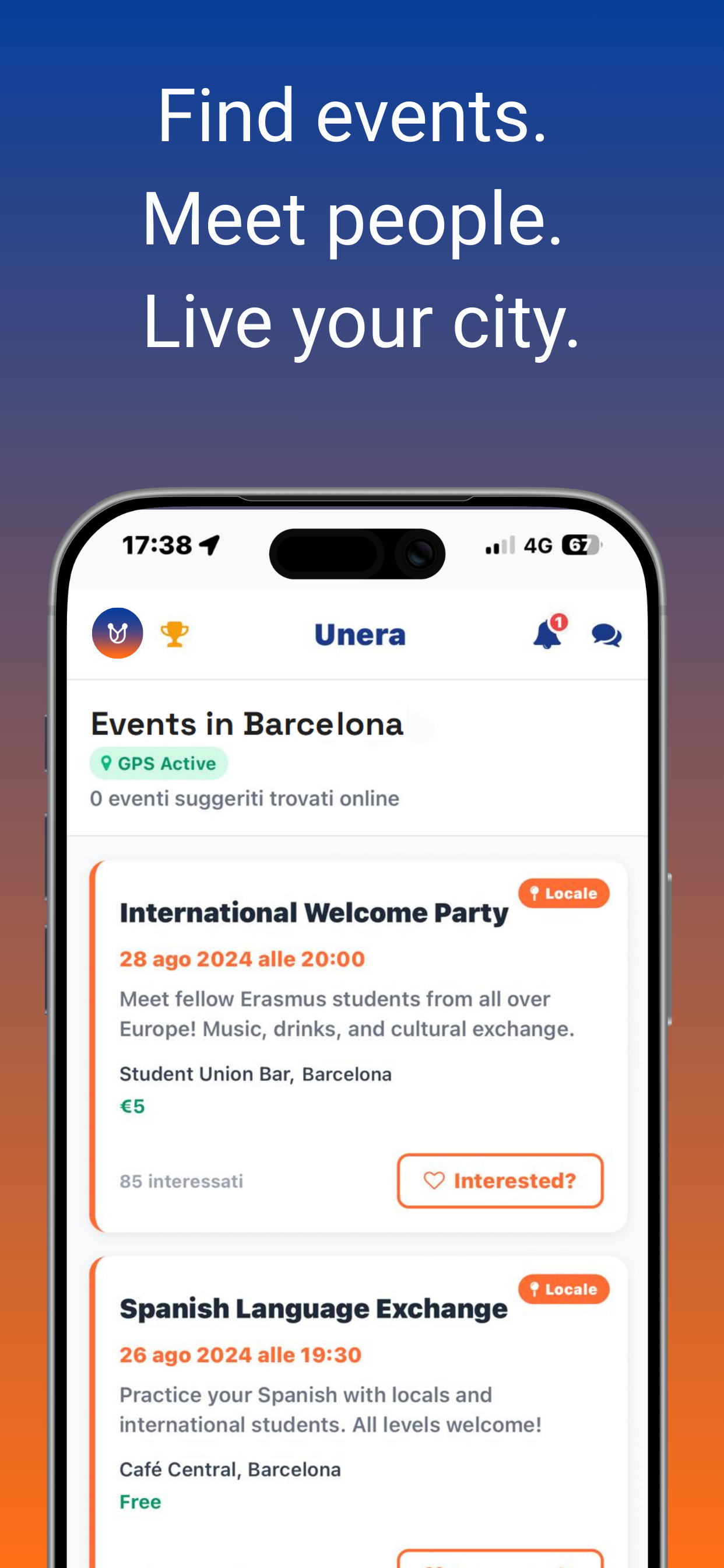
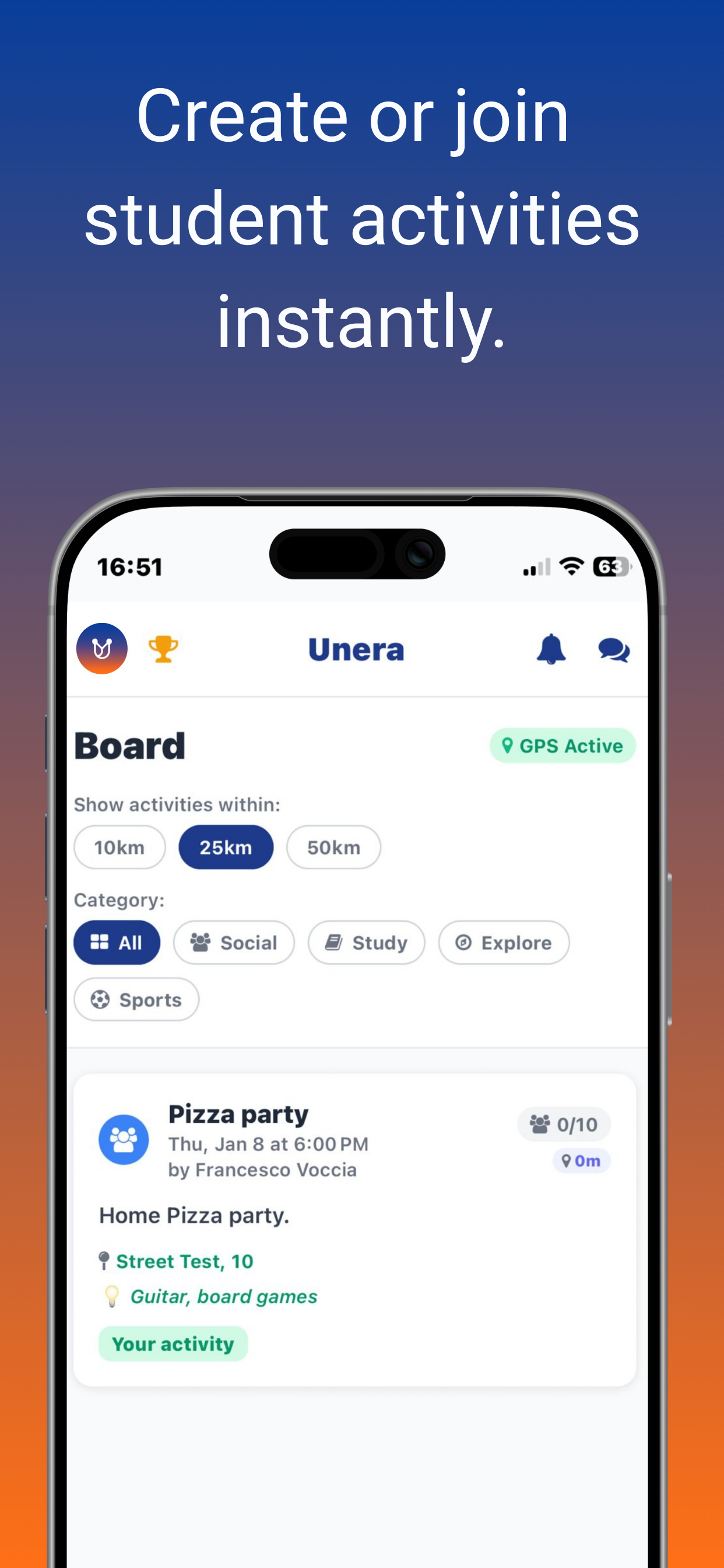
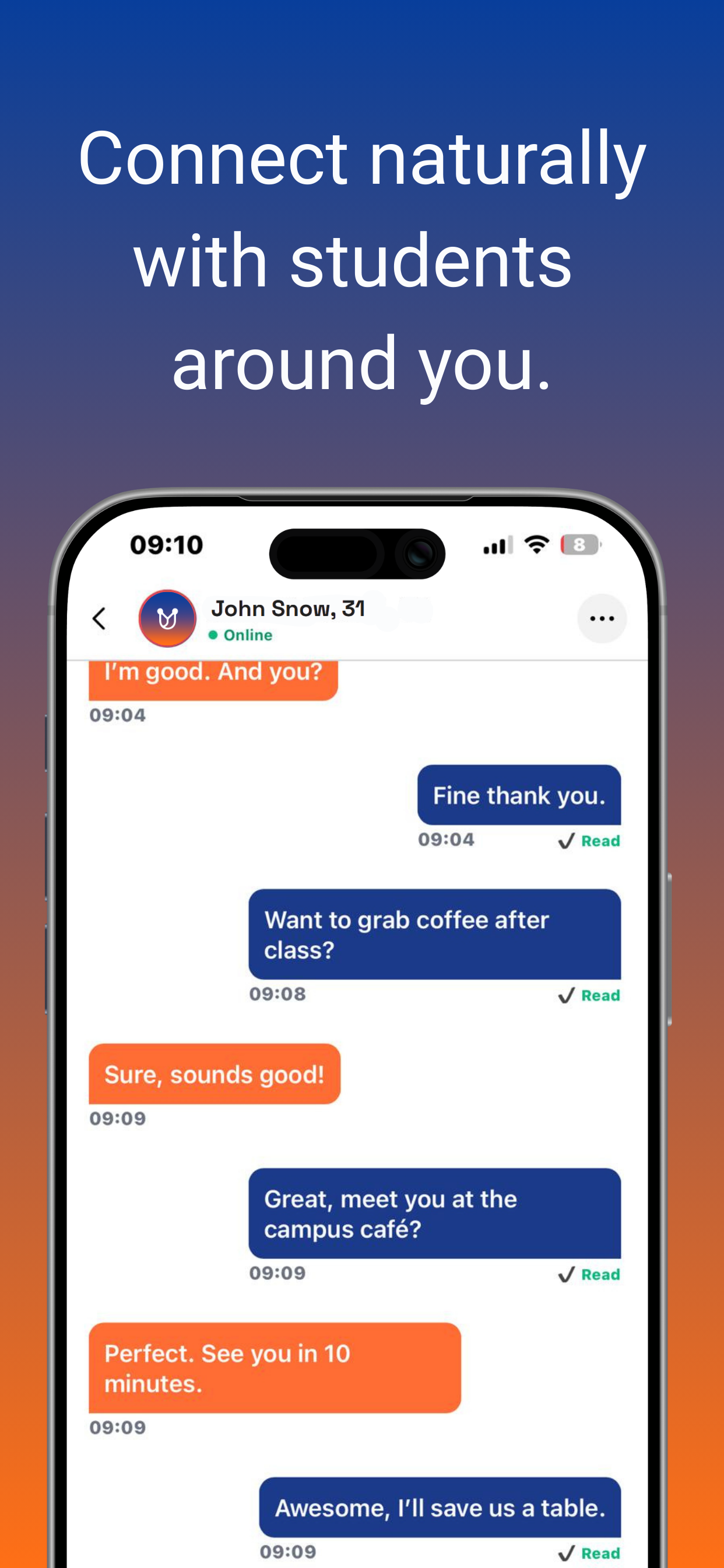
Unera is built for the part of study abroad that destination guides do not solve: finding nearby students, discovering useful plans, starting conversations and keeping momentum after the first week.
In Algeria, this matters because the social map is real but fragmented. Students move through universities, language habits, scientific clubs, cafes, private chats and local routines. Unera helps connect the people layer and the plan layer.
See people around your city with more context than a random group chat.
Keep useful plans closer together when the social map is spread across campus channels and local chats.
Move from a first meeting to the next plan instead of letting the semester stay surface-level.
Use Unera to discover nearby students, find useful plans and turn your first weeks in Algeria into real social momentum.