


Tenjin
The clearest central reference point for shopping, dinners, bars and meetups, especially for students who want the social center close to everyday life.
Fukuoka is the softer and more manageable city in the Japan cluster, combining strong student life, practical movement and lower pressure than Tokyo or Osaka without feeling empty or isolated.
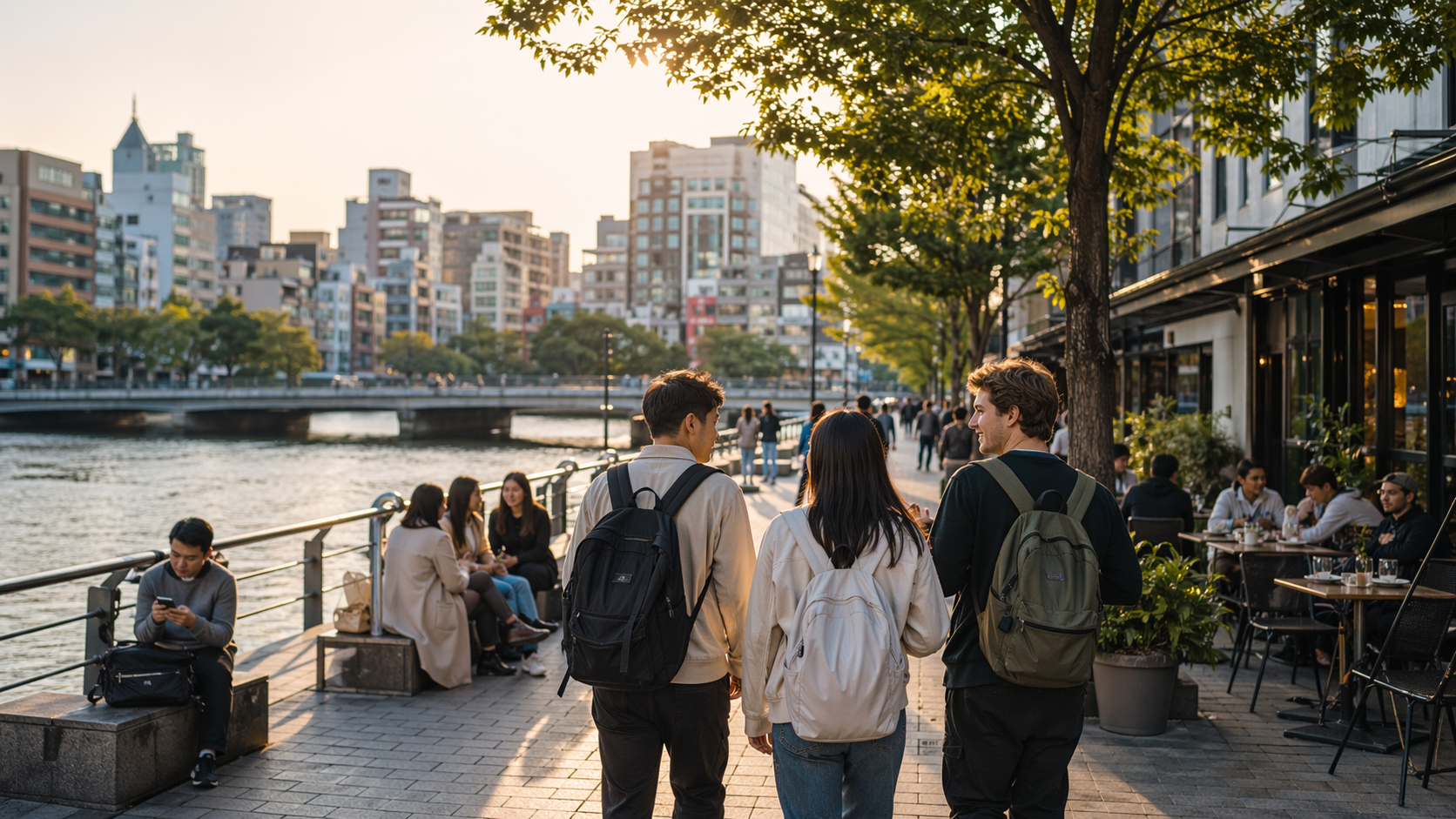
Fukuoka works well for students who want Japan without starting from the country's most intense city scale. The city is easier to read, daily movement is more manageable and student life often feels more coherent from the beginning than in Tokyo.
Most students build momentum through Kyushu University routines, Tenjin dinners, Hakata movement, smaller neighborhood cafes, language exchange and the fact that Fukuoka lets you repeat the same places quickly enough for faces to become familiar.
This page sits inside the Erasmus in Japan guide and the Erasmus cities hub, and it links back to the Unera homepage. Before arrival, read how to meet Erasmus students and how to make friends during Erasmus. If you are comparing tools for the social side of exchange, open the Erasmus student app page as well.
Fukuoka is most useful to compare with Osaka, Kyoto and Tokyo. Osaka gives more nightlife scale, Kyoto more academic calm and Tokyo far more variety and pressure.
Fukuoka is strong for students who want a semester that becomes livable quickly. The city is large enough to stay interesting, but small enough that transport, districts and student routines can make sense early.
That gives Fukuoka an advantage over bigger Japanese routes for some exchange students. Social momentum can build faster because students do not spend as much time managing distance and endless options.
Compared with Tokyo, Fukuoka is simpler and lower pressure. Compared with Osaka, it is less nightlife-heavy. Compared with Kyoto, it feels more contemporary and coastal in rhythm.
The clearest central reference point for shopping, dinners, bars and meetups, especially for students who want the social center close to everyday life.
Useful for cafes, smaller bars, trendier local movement and regular evenings that feel social without turning into only big nights.
Important for transport and practical movement, and useful for students whose daily routine depends on staying well connected across the city.
Strong for a calmer residential feel, student life near universities and easier access to everyday routines rather than constant central noise.
Important for students linked to Kyushu University, especially when campus life shapes more of the week than downtown nightlife.
The main academic anchor behind Fukuoka's international student ecosystem, especially for exchange and research-linked student life.
An important local student base that strengthens the city's everyday student movement beyond one elite international route.
Adds another valuable international-facing student layer and helps connect campus routine with central and west-side living zones.
Fukuoka usually feels less fragmented than Tokyo, but students still find plans through universities, language exchanges, local meetups, bars, cafes and smaller community channels rather than one obvious Erasmus system.
The strongest plans are simple and repeatable: dinners in Tenjin, cafes in Daimyo, campus events, language exchange and small weekend plans that keep the same people in circulation.
Students who try to force Fukuoka into a nonstop-party model often miss the city's real advantage, which is how usable and sustainable the social map can become.
Fukuoka is easier socially than its size might suggest because the city allows more repetition and less wasted movement.
Orientation, class groups and international office events matter because they create the first stable layer of names and invitations.
Returning to Tenjin, Daimyo or your main campus route helps friendships build faster. For the wider method, read how to meet Erasmus students.
Coffee, ramen, casual dinners or a short walk after class often work better in Fukuoka than waiting for a giant organized night.
Unera helps connect students and plans when your social map is split between campus groups, language exchange and central-city routines.
Nightlife in Fukuoka is real, but it usually feels more manageable than in Osaka or Tokyo. Students often combine bars, izakaya, karaoke and casual central-city evenings with a broader weekly rhythm that stays practical.
That balance is part of the city's value. You can go out, but the city does not demand constant intensity to feel social.
The best Fukuoka semesters often come from consistent medium-energy plans rather than chasing nonstop novelty.
The city is easiest when you choose housing that supports both campus movement and central social life without long friction.
If your university routine sits far from the center, plan your week around that early so you do not lose time and energy unnecessarily.
Fukuoka gives you the chance to repeat places and people more easily than bigger cities. Use that instead of wishing the city were noisier.
Fukuoka can be a good city for using simple Japanese regularly because the pace is manageable and the city feels less overwhelming.
Fukuoka already has a usable scale. Unera helps make that scale socially clearer by showing nearby students and practical plans.
The app helps when your network is split between university channels, local events and separate friend groups.
Fukuoka rewards continuity. Unera helps keep that continuity visible and easier to act on.
Use Unera to discover students, find plans and turn Fukuoka's manageable scale into real social momentum from the first weeks.