


Umeda
A practical city center reference point for transport, shopping, dinners and meetup plans, especially for students moving across several parts of Osaka.
Osaka is the most direct large-city route in the Japan cluster, combining strong nightlife, practical transport and easier social readability than Tokyo. It works well for students who want energy without total sprawl.
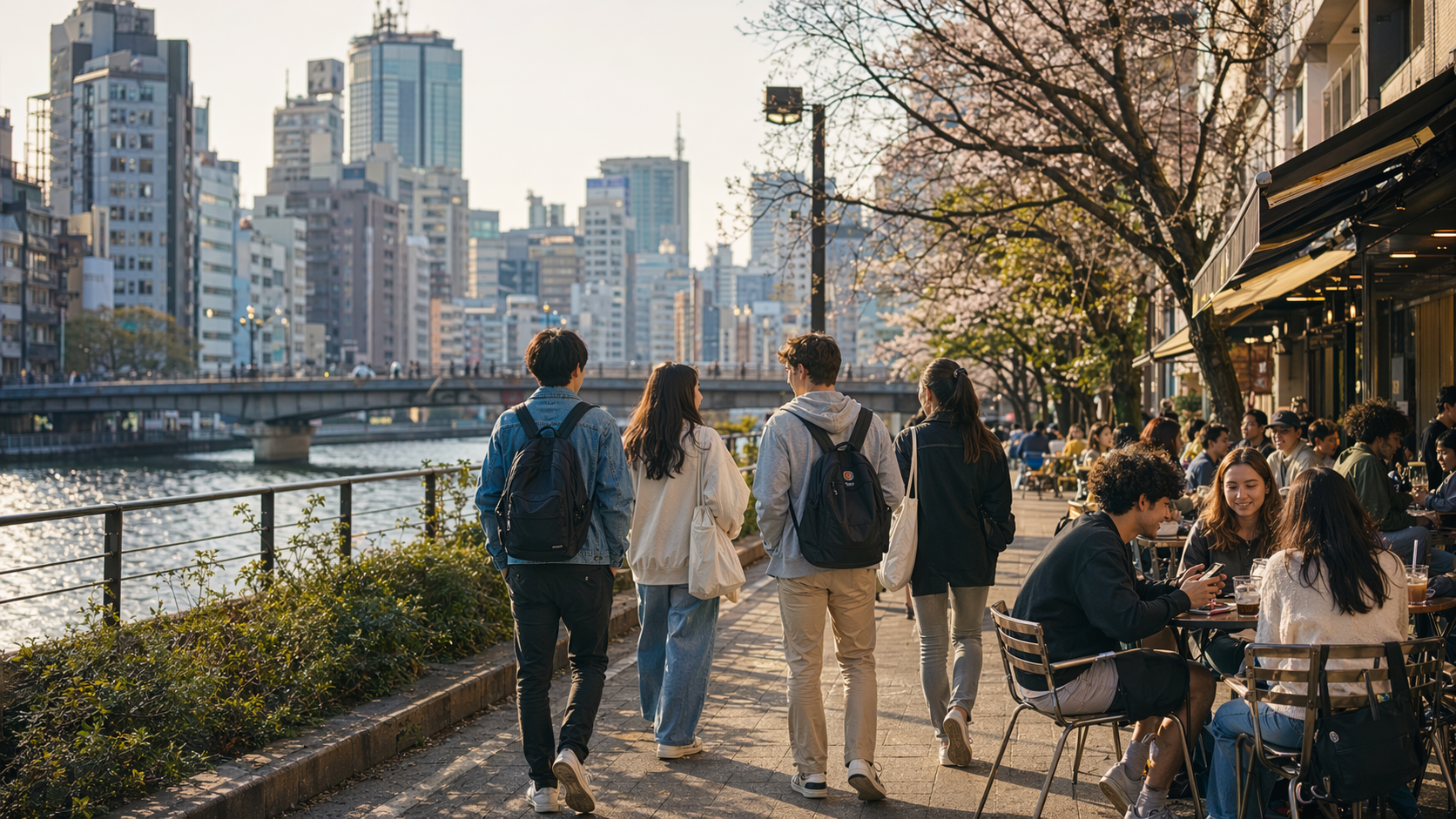
Osaka is often the easiest big Japanese city to read socially. The city feels more direct than Tokyo, more nightlife-led than Kyoto and still large enough to offer major universities, district variety and strong everyday movement for exchange students.
Most students build momentum through Osaka University or Kansai University networks, Namba and Shinsaibashi evenings, Umeda meetups, smaller bars in Nakazakicho, shared dinners and the advantage of being able to move around Kansai quickly without overcomplicating the week.
This page sits inside the Erasmus in Japan guide and the Erasmus cities hub, and it links back to the Unera homepage. Before arrival, read how to meet Erasmus students and how to make friends during Erasmus. If you are comparing tools for the social side of exchange, open the Erasmus student app page too.
Osaka is most useful to compare with Tokyo, Kyoto and Fukuoka. Tokyo gives more scale, Kyoto more academic calm and Fukuoka a lighter and more compact social map.
Osaka works well because it combines big-city options with a more readable social map. Students often feel they can understand the city faster, which makes it easier to turn first contacts into routine.
The city suits exchange students who want nightlife and energy without living inside an endless list of options. Osaka often feels more forgiving than Tokyo because the distance between campus life, dinner plans and nightlife is easier to handle.
Compared with Tokyo, Osaka is more direct and usually easier to learn quickly. Compared with Kyoto, it is louder and more nightlife-driven. Compared with Fukuoka, it is bigger, busier and more regionally connected.
A practical city center reference point for transport, shopping, dinners and meetup plans, especially for students moving across several parts of Osaka.
The clearest nightlife and evening zone in Osaka, useful for students who want visible social movement and easier first-week plans.
Valuable for smaller cafes, bars, more local-feeling evenings and lower-pressure social plans than the busiest entertainment corridors.
A useful south-side base for students who want strong rail connections and a practical mix of daily life and evening access.
Important for students tied to Osaka University and northern campus movement, especially when daily routine matters more than always sleeping in the center.
A major academic anchor in the Kansai region that shapes a large part of the exchange-student ecosystem and north-side student movement.
Kansai University adds another important student layer and helps make Osaka feel socially broad rather than dependent on one institution.
This university strengthens the local student presence across the city and adds more routes into Osaka's practical day-to-day student life.
Osaka has a more visible nightlife and event layer than Kyoto, but discovery is still split across universities, club circles, language exchanges, student groups, bars, Instagram accounts and group chats.
The most useful plans are usually the ones that stay easy to repeat: dinners in Namba, casual drinks in Nakazakicho, karaoke, club-circle socials or small weekend trips across Kansai.
Use the big nights as entry points, not as the whole model. Osaka works best when you combine obvious social zones with one or two routines that can keep going during the week.
Osaka is socially accessible, but continuity still matters. The city becomes much stronger when big-city ease turns into repeated smaller plans.
International offices, orientation, class groups and student clubs give the first social layer before the city opens up properly.
Returning to a few reliable areas such as Umeda, Namba or Nakazakicho helps Osaka feel socially smaller. For the broader method, read how to meet Erasmus students.
After nightlife, propose coffee, lunch or a casual dinner. In Osaka, that follow-up is usually what creates the real friend group.
Unera helps connect nearby students and relevant plans when Osaka's social activity is spread across campus, nightlife and different districts.
Nightlife is one of Osaka's clearest advantages. Namba and Shinsaibashi give the city obvious social energy, while smaller districts create more repeatable formats for students who do not want every night to feel huge.
Karaoke, izakaya, bars, club nights and casual street-level movement make Osaka feel more immediately social than many Japanese cities. That helps exchange students settle faster if they still create routine alongside the nightlife.
The best Osaka semesters usually combine nightlife with practical daytime rhythm. Too much of one without the other makes the city feel less stable over time.
Living near nightlife changes your evenings, but living closer to campus may make the whole week easier. Decide based on the routine you want.
Osaka becomes even stronger when you understand how easily Kyoto and other nearby routes fit into weekends and even some weekday plans.
One club, hobby group, cafe or campus routine gives Osaka much more long-term value than relying only on nights out.
Osaka is easy to enjoy, but social depth still comes from repeated initiative. For more structure, read how to make friends during Erasmus.
Osaka is active, but the useful social layer can still hide inside many chats and districts. Unera helps make it clearer.
The app helps turn one good Osaka night into the next coffee, dinner or group plan instead of letting contact disappear.
Unera works well in Osaka because the city rewards students who can keep contact moving after the first easy introduction.
Use Unera to discover students, find useful plans and turn Osaka's easy first contact into a real social routine.