


Waseda and Takadanobaba
One of the clearest student corridors in Tokyo, useful for campus life, cheap meals, regular movement and easier first-month social repetition.
Tokyo is the broadest Japan route for exchange and international students, with huge university choice, fast transport and endless neighborhoods. The challenge is not finding options. It is choosing a social map you can actually repeat.
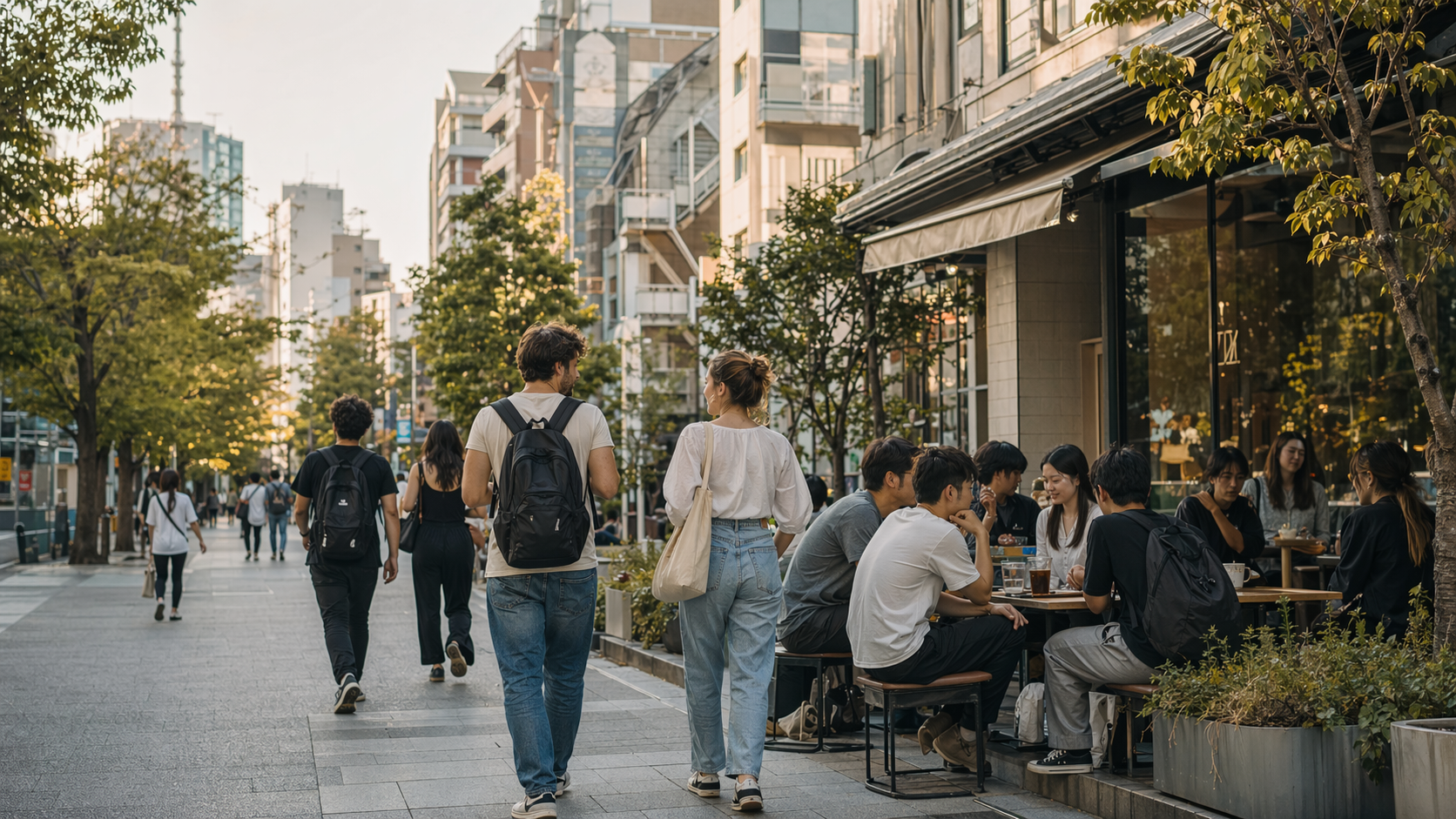
Tokyo works for students who want range. The city gives you major universities, strong public transport, district-level contrast and a visible international layer, but it is rarely a city that solves social life automatically. Students usually do best when they reduce Tokyo into a few routes they can repeat rather than trying to understand everything at once.
Most students build momentum through orientation, campus circles, neighborhoods such as Waseda-Takadanobaba, Shibuya, Shimokitazawa or Kichijoji, language exchange, hobby groups and smaller dinners or karaoke plans that create follow-up after class.
This page sits inside the Erasmus in Japan pillar and the Erasmus cities hub, and it links back to the Unera homepage. Before arrival, read how to meet Erasmus students and how to make friends during Erasmus. If you are comparing tools for the social side of exchange, open the Erasmus student app page as well.
Tokyo is most useful to compare with Osaka, Kyoto and Fukuoka. Osaka feels more direct and socially readable, Kyoto calmer and more academic, and Fukuoka lighter and easier to manage.
Tokyo gives students more choice than almost any city in the Unera cluster, but choice can become noise. The most successful exchange students usually build one campus routine, one evening routine and one weekend routine instead of relying on random discovery.
The city works best when transport, neighborhoods and friendships start overlapping. Once you know which stations, cafes, campus spaces and dinner spots you actually repeat, Tokyo feels much less abstract and much more social.
Compared with Osaka, Tokyo is larger and less immediately legible. Compared with Kyoto, it is broader and more international. Compared with Fukuoka, it is denser, more expensive and more demanding logistically.
One of the clearest student corridors in Tokyo, useful for campus life, cheap meals, regular movement and easier first-month social repetition.
Strong for nightlife, broad city energy and meeting points, especially for students who want Tokyo to feel fast and visibly active.
Good for smaller social circles, cafes, music venues and a more local-feeling routine than the biggest entertainment districts.
Useful for students who want a calmer and more livable atmosphere while still staying connected to central Tokyo and student movement.
Valuable for lower-pressure evenings, thrift and music scenes and a student routine that feels less polished than central flagship districts.
A major academic anchor for Tokyo with a strong international reputation and a student ecosystem that connects research, campus routine and city movement.
One of the clearest exchange-student reference points in the city because Waseda combines visible campus life with a district that students actually use every day.
These universities add a more international and urban student profile, especially for students whose social life sits across several central districts rather than one campus zone.
Tokyo has plenty of activity, but discovery is fragmented. International offices, student circles, language exchanges, hobby groups, event apps, neighborhood venues and friend-of-friend plans all carry part of the social map.
The strongest events are usually the ones that create a second meeting: a circle trial session, a language exchange that becomes coffee next week, or a dinner plan that turns into a regular district routine.
Use events as entry points, not as the entire strategy. Tokyo becomes much easier once you stop browsing endlessly and start repeating the places that already worked once.
Tokyo rewards students who combine campus entry points with neighborhood continuity. Big-city social life becomes easier when you design repetition on purpose.
Use orientation, exchange office events, class introductions and circle fairs first. They create the first names and group chats that make the city feel less anonymous.
Pick two or three districts you can really use after class. For the broader process, read how to meet Erasmus students.
After a large meetup, suggest coffee, lunch, karaoke or a casual dinner. In Tokyo, that move matters more than attending the next five big events.
Unera helps reduce the friction between Tokyo's scale and your actual social options by keeping nearby students, chats and plans visible in one place.
Nightlife in Tokyo is broader than just clubs. Izakaya, karaoke, live houses, late cafes, neighborhood bars and small group dinners shape the real student social layer.
Shibuya and Shinjuku are the obvious references, but many students build better routines through smaller zones such as Shimokitazawa, Koenji or Kichijoji where repeat contact feels easier.
The strongest Tokyo semesters usually mix a few bigger nights with many smaller, more repeatable plans. That is what turns the city from impressive into usable.
A cheap room can become expensive if trains, transfers and time kill your social energy. Pick a route you can live with every day.
You do not need all of Tokyo at once. Learn home to campus, campus to your main evening area and your late route back.
Resident registration, phone setup, banking and student documents feel easier when finished early, before classes and social plans stack up.
A circle, cafe study group, language exchange or recurring dinner is more valuable in Tokyo than a long list of one-off ideas.
Tokyo gives huge social volume but not always clarity. Unera helps you understand who is nearby and why that contact may matter.
The app reduces the usual Tokyo friction of too many chats, districts and half-visible plans spread across the same city.
Tokyo rewards repeated contact. Unera helps you keep the conversation moving after the first dinner, class or language exchange.
Use Unera to discover students, find local plans and turn Tokyo from a huge map into a social routine you can actually use.