


Demachiyanagi and Hyakumanben
A key student zone because of Kyoto University life, bike movement, cheap food and the kind of repeated routines that make it easier to know people by name.
Kyoto is a strong Japan route for students who want academic depth, bikeable routine, cultural atmosphere and a semester that feels more focused than Tokyo without becoming socially empty.
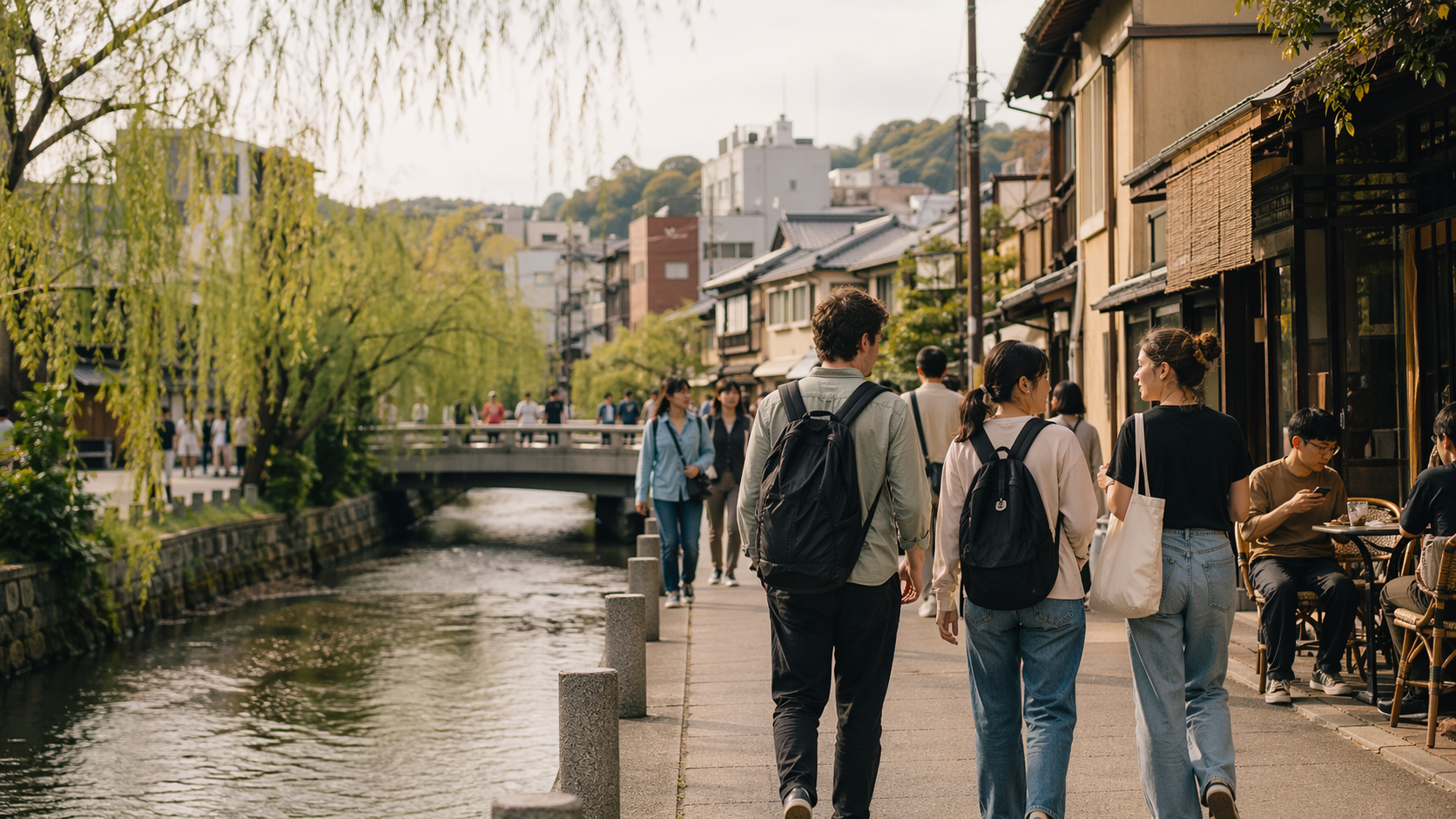
Kyoto works best for students who want a semester shaped by campus life, cycling, neighborhood routine and cultural depth. It is not the loudest city in the Japan cluster, but that is part of its strength. The city rewards students who like structure, repeated habits and a social map that becomes clearer over time.
Most students build their week around Kyoto University, Doshisha or Ritsumeikan routines, bike movement, cafes near Demachiyanagi or Imadegawa, smaller bars and dinners around Sanjo-Kawaramachi and the habit of moving between study, culture and social plans without huge distance.
This page sits inside the Erasmus in Japan guide and the Erasmus cities hub, and it links back to the Unera homepage. Before arrival, read how to meet Erasmus students and how to make friends during Erasmus. If you are comparing tools for the social side of exchange, open the Erasmus student app page too.
Kyoto is most useful to compare with Osaka, Tokyo and Fukuoka. Osaka gives more social immediacy, Tokyo more scale and Fukuoka a softer and simpler city map.
Kyoto does not usually overwhelm students with visible social noise. Instead, it gives a slower and more coherent rhythm where class schedules, bike routes, cafes, club activity and small evening plans create the semester.
That makes Kyoto attractive for exchange students who want time to study, explore and socialize without the constant intensity of larger capitals. The city feels more livable when you accept that student life here is built through continuity, not hype.
Compared with Osaka, Kyoto is calmer and more campus-centered. Compared with Tokyo, it is simpler and more manageable. Compared with Fukuoka, it feels more historic and academically concentrated.
A key student zone because of Kyoto University life, bike movement, cheap food and the kind of repeated routines that make it easier to know people by name.
Useful for Doshisha students and for anyone who wants an area that connects campus access with practical daily living and regular coffee or dinner spots.
The clearest evening reference point for bars, dinners, shopping streets and social plans that stay central without becoming as overwhelming as Tokyo nightlife districts.
Good for students connected to Ritsumeikan or other western campuses who want a livelier residential rhythm without depending on the touristic core.
A major academic anchor with strong international visibility and a campus geography that feeds directly into one of the clearest student areas in the city.
Doshisha adds a strong private-university and exchange-student layer to central Kyoto, especially around Imadegawa and the northern center.
These institutions widen the student map and make Kyoto feel more than a single campus city, especially for students whose routine depends on biking and district choice.
Kyoto usually does not rely on one dominant Erasmus event calendar. Useful entry points come through international offices, university clubs, language exchanges, seasonal events, small bars, cultural workshops and friend-of-friend dinners.
The best Kyoto plans are the ones that repeat naturally: a bike ride after class, one favorite cafe, a language partner, a campus circle or a dinner zone you keep returning to.
Students who chase only the biggest visible nights often misunderstand Kyoto. The city gives more value through smaller and steadier social contact.
Kyoto is easier socially when students use campus structure and neighborhood repetition together instead of expecting instant nightlife to do the work.
Orientation, exchange office activity and student clubs matter a lot in Kyoto because they create the first stable layer of routine.
If you return to Demachiyanagi, Hyakumanben, Imadegawa or Sanjo regularly, the city becomes friendlier. For the broader process, read how to meet Erasmus students.
Museum visits, temple walks, markets and casual dinners can be excellent follow-up plans in Kyoto because they suit the city's rhythm better than pushing every night toward something loud.
Unera helps when your network is split between campus, language exchange, small group chats and neighborhood routines instead of one big social channel.
Nightlife in Kyoto exists, but it usually feels smaller and more local than in Osaka or Tokyo. Bars, izakaya, live venues, river-area evenings and smaller group dinners matter more than giant club circuits.
That is good for students who want their social life to feel sustainable across the whole semester. Kyoto often rewards medium-energy evenings and repeatable plans more than all-night intensity.
The city is strongest when students let study, culture and social life overlap. That mix gives Kyoto its real value as a study abroad destination.
Kyoto often becomes easier once you understand which parts of the city you can link by bike instead of imagining everything through long transit plans.
A beautiful traditional area can feel less useful if it disconnects you from campus and daily student movement.
Kyoto sometimes feels quiet at the start. That does not mean the city is socially weak. It usually means you need a little repetition before the social map appears.
Even limited Japanese helps a lot in Kyoto because everyday politeness and small interaction matter for feeling settled.
Kyoto social life can stay hidden if you only look for obvious events. Unera helps surface nearby students and practical ways to connect.
The app helps connect university routines with neighborhood plans so friendships do not stay limited to one class or one club.
Kyoto is a city of steady follow-up. Unera helps keep that follow-up visible and easier to continue.
Use Unera to discover students, find useful plans and turn Kyoto's calmer rhythm into a real and repeatable social routine.